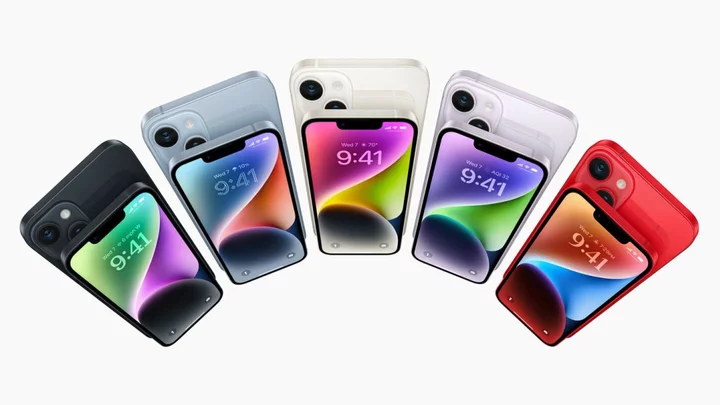
Spain fines Apple and Amazon $218 million for elbowing out small retailers
Amazon and Apple have been fined a total of $218 million after Spanish regulators say they colluded to box out competitors by favoring sales of Apple products directly from the online retail giant
2023-07-18 23:57
Here's why it is 2016 in Ethiopia
Ever wanted to travel back in time? Well, now you can! (Kind of) You see, whilst the world largely uses the Gregorian calendar, introduced in 1582 by Pope Gregory XIII, some countries have different ways of dividing the year, such as Ethiopia. Prior to the Gregorian calendar most of the Roman World and Europe used the Julian calendar, introduced by Julien Caesar in 45 BCE. The reason the Julian calendar was phased out and replaced is because it was slightly out of sync with the Earth's orbit around the Sun. The transition was not easy, spanning hundreds of years and meaning countries lost between 10 and 13 days. In Ethiopia it is currently 2016 (maybe someone should warn them of what's to come?) Ethiopians follow a 13 month calendar - Meskerem, Tikimt, Hidar, Tahsas, Sir, Yakatit, Maggabit, Myazya, Ginbot, Sene, Hamle, Nehasa, and Pagume. 12 of the months consist of exactly 30 days each, with the final month having five or six days, depending on whether it's a leap year. The time of day is different to how most us understand it too, with the day divided into two 12-hour halves that begin at 6am rather than midnight. The reason it's currently 2016 in Ethiopia goes back to 500 CE. In 500 CE, the Catholic Church changed its calculations of when Jesus was born, but the Ethiopian church did not, and as an extra side bonus this places their new year on the Gregorian September 11. Due to never being colonised, Ethiopia continued to use the older calculations resulting in them living in 2016. Sign up to our free Indy100 weekly newsletter Have your say in our news democracy. Click the upvote icon at the top of the page to help raise this article through the indy100 rankings.
2023-10-21 22:23
How one lake has captured the moment we changed the world forever
The floor of Crawford Lake in Ontario acts like a storybook, preserving Earth’s recent history in chronological order. Crawford Lake reveals the activities of local Iroquoian communities from the late 13th to 15th centuries, all the way through to the present day. This is because Crawford Lake is a meromictic lake, meaning that the dense bottom layer of water does not mix with the less dense upper layers. “The isolated bottom layer of water remains under disturbed, enabling the accumulation of clearly laminated valves which record precise information about the time during which they were deposited,” according to the Anthropocene Working Group. Experts have nominated Crawford Lake as representation for the start of the Anthropocene epoch, a proposed new geological era characterised by significant changes to the planet’s surface as a result of human behaviour. The Anthropocene is yet to be officially accepted as a unit of geologic time, but in 2016 a working group under the guidance of an International Commission on Stratigraphy subcommittee agreed that human behaviour has left scars so deep that they will remain evident even into the distant future. Sign up to our free Indy100 weekly newsletter One of the most notable markers of the Anthropocene is the appearance of plutonium, a radioactive material that appeared in the mid-20th century as a result of hydrogen bomb tests. “The presence of plutonium gives us a stark indicator of when humanity became such a dominant force that it could leave a unique global ‘fingerprint’ on our planet,” explained Professor Andrew Cundy, Chair in Environmental Radiochemistry at the University of Southampton and member of the Anthropocene Working Group. “In nature, plutonium is only present in trace amounts. But in the early-1950s, when the first hydrogen bomb tests took place, we see an unprecedented increase and then spike in the levels of plutonium in core samples from around the world. We then see a decline in plutonium from the mid-1960s onwards when the Nuclear Test-Ban Treaty came into effect.” Agreeing on a simple measure that defines the boundary between chapters in Earth’s history is just the first step. This measure requires agreement among scientists on a single location to define the boundaries. Known as the Global Boundary Stratotype Section and Point, or a golden spike, plays a crucial role in standardising these borders between epochs. The Anthropocene Working Group has been evaluating potential golden spike sites, from Oued Akrech, Morocco, to Alano di Piave, Italy. After spending three years assessing the qualities of a dozen potential golden spikes for the Anthropocene, finally the AGW has landed on Crawford Lake. “Crawford Lake is so special because it allows us to see at annual resolution the changes in Earth history throughout two separate periods of human impact on this small lake,” micropalaeontologist Francine McCarthy of Brock University in Canada, a voting member of the AGW, said at a press briefing. The lake’s unique properties, such as its small size, depth, and lack of water mixing create sediments that precisely record environmental changes over the past millennia. To officially establish the Anthropocene in the International Chronostratigraphic Chart, the golden spike at Crawford Lake must undergo a series of voting by various commissions and unions. If successful, it will mark the moment when human activities permanently altered the planet. Have your say in our news democracy. Click the upvote icon at the top of the page to help raise this article through the indy100 rankings.
2023-07-16 17:16
Here are all the AI updates Microsoft announced at its developers conference keynote
At its annual Microsoft Build developer conference in Seattle on Tuesday, the company announced a series of AI updates to make both Bing and ChatGPT smarter, more intuitive and potentially more ubiquitous.
2023-05-24 02:58
Bonitasoft Introduces Self-contained Apps for Composable Business Process Automation
SAN FRANCISCO--(BUSINESS WIRE)--May 11, 2023--
2023-05-11 21:25
Get this stacked Microsoft Office Pro bundle for under £70
TL;DR: The Ultimate Microsoft Office Pro 2021 for Windows, Windows 11 Pro, and Degoo Premium
2023-07-11 12:22
Get a like-new HP desktop and lifetime MS Office Pro for under $300

TL;DR: As of August 6, you can get a refurbished HP EliteDesk computer and lifetime
2023-08-06 17:46
Five Years, Nearly Half a Billion Dollars Saved by Associates: Walmart Celebrates Milestones in Associate Education
BENTONVILLE, Ark--(BUSINESS WIRE)--May 25, 2023--
2023-05-25 22:48
Microsoft Outlook users hit with Monday morning outage
Thousands of Microsoft Outlook users reported issues accessing their email accounts on Monday morning.
2023-06-06 00:29
Blockchain analysts suspect N. Korea-linked hackers behind $70m crypto theft
By Elizabeth Howcroft and Raphael Satter LONDON Blockchain researchers say North Korea-linked hackers are likely behind a $70
2023-09-16 01:25
Options and valantic FSA Forge Strategic Partnership to Revolutionise Global Infrastructure and Cloud Solutions
LONDON & NEW YORK & HONG KONG--(BUSINESS WIRE)--Sep 13, 2023--
2023-09-13 19:49
Scientist shares routine that can 'make you better at everything'
The emphasis on a good night's sleep is nothing new. But now, neuroscientist, Dr Andrew Huberman, has shared one routine that he suggested can make you "better at everything." In a YouTube talk on After Skool, Dr Huberman said he immediately starts his day with a sunrise walk at 6.30am. "Getting outside for a 10-minute walk or a 15-minute walk is absolutely vital to mental and physical health," he shared. Despite coffee being the get-up-and-go drink for most, Huberman says the first beverage he consumes is salty water, as he claims it helps improve bodily functions. "There are certain foundational behaviours - certain dos and don'ts that set the stage for you to be better at everything," he continued. "It always comes back to two elements - that's sleep and what I call non-sleep deep rest. Sleep is the fundamental practice or part of our 24-hour cycle where if you don't get it on a consistent basis, you are down-regulating your ability to do everything." He went on to discuss a "90-minute bout of work," in which he says he turns his phone off to fully optimise this time. "You'd be amazed how much you can get done in 90 minutes if you are focused," he said. Huberman then ensures he gets in an hour's worth of exercise before exposing himself to cold temperatures such as an ice bath. The NHS states that there are no official guidelines regarding how much sleep a person should get each night as everyone is different. "On average, a 'normal' amount of sleep for an adult is considered to be around seven to nine hours a night. Children and babies may sleep for much longer than this, whereas older adults may sleep less," they wrote. Sign up for our free Indy100 weekly newsletter Have your say in our news democracy. Click the upvote icon at the top of the page to help raise this article through the indy100 rankings.
2023-08-25 21:58
You Might Like...
Hades 2 will launch in early access in early 2024
Ford’s EV Battery Partner Targets US Growth Over Profit
Did Olivia Dunne hint at having new love interest in latest TikTok video?
How to Automate Your Life With Apple's Shortcuts App
Indonesia may issue regulation on social media e-commerce this week -president
Alibaba to Exit Cloud Business After Beijing Undercuts Potential
Olivia Dunne stuns in corset top as she poses with FSU stars at popular TikToker’s birthday, fans say 'this squad is unbeatable'
Grado SR325x Review