

Apex Legends Halloween 2023 Event: Collection Event, Revenant Prestige Skin, Release Date
The Apex Legends Halloween 2023 Event features the Doppelgangers Collection Event, a Revenant Prestige skin, and a Halloween LTM starting on Oct. 17.
2023-09-26 02:47

Russian cyber-attacks ‘relentless’ as threat of WW3 grows, expert warns
Cyberattacks by the UK’s enemies are becoming “relentless” as we enter a “new era” of global conflict, an expert has warned. It comes after Russian hackers allegedly acquired top-secret security information on some of the country’s most sensitive military sites, including the HMNB Clyde nuclear submarine base on the west coast of Scotland and the Porton Down chemical weapon lab. The “potentially very damaging” attack last month by hacking group LockBit, which has known links to Russian nationals, saw thousands of pages of data leaked onto the dark web after private security firm Zaun was targeted, the Sunday Mirror newspaper reported. The company, which provides security fencing for sites related to the Ministry of Defence, said it had been the victim of a “sophisticated cyber attack”. Responding to the news, Kevin Curran, professor of cyber security at Ulster University, told the PA news agency that LockBit’s attack was “serious” as we approach a potential “World War Three” following Russia’s invasion of Ukraine. He said the raid was “likely” sponsored by the Russian state given the nature of its target and that cyber attacks by Britain’s enemies had become “relentless”. Professor Curran warned that we were unprepared for this new era as third-party companies, which hold data on our military infrastructure were not being properly regulated. He said: “You can’t just expect third-party suppliers to adhere to your rules. “There is always a risk when you have third-party suppliers and you do wonder if they adhere to industry best practice. “It is a worry because everything is online now – cybercrime is the biggest crime in the world. “Given the new era we are entering which is the brink of World War Three everything is serious. They are relentless with these attacks Professor Kevin Curran “They are relentless with these attacks. Their best way into our country is through our cyber-security. This is the nation at risk. “In this case, given the target, my money would be on this being state-sponsored.” It comes after Labour MP Kevan Jones, who sits on the Commons Defence Select Committee, urged the Government to explain why Zaun’s computer systems were “so vulnerable”, warning: “This is potentially very damaging to the security of some of our most sensitive sites.” “Any information which gives security arrangements to potential enemies is of huge concern,” he added. The government has so far declined to respond to concerns, with a spokesperson saying: “We do not comment on security matters.” In a statement on its website published on Friday, Zaun said it had taken “all reasonable measures to mitigate any attacks on our systems” and explained that they had referred the matter to the National Cyber Security Centre (NCSC). It explained that the breach occurred through a “rogue Windows 7 PC” that was running software for one of their manufacturing machines but that the network was “otherwise up to date”. It said: “At the time of the attack, we believed that our cyber-security software had thwarted any transfer of data. “However, we can now confirm that during the attack LockBit managed to download some data, possibly limited to the vulnerable PC but with a risk that some data on the server was accessed. “It is believed that this is 10 GB of data, 0.74 per cent of our stored data. “It is well known that Zaun is a specialist in high-security perimeter fencing and has supplied fencing to many high-profile sites. “Sites where our products are used include prisons, military bases and utilities.” Zaun has been approached for further comment. Read More Ukraine-Russia war – live: Putin suffering ‘mounting casualties’ and forced to appeal for foreign fighters Russia attacks a Ukrainian port before key grain deal talks between Putin and Turkey's president Russians press Ukraine in the northeast to distract from more important battles in counteroffensive Ukraine ‘targets critical bridge’ built by Putin as counteroffensive ‘breaks through on southern front’ Charity boss speaks out over ‘traumatic’ encounter with royal aide Ukraine war’s heaviest fight rages in east - follow live
2023-09-04 01:48

New study suggests blue light from phones may drastically alter puberty
Blue light emitted from the screens of phones, tablets and televisions could induce puberty early, a study has found. In the modern day, children are raised with devices all around them, with many having a phone or tablet to keep them entertained from a young age. But, researchers in Turkey have discovered that it exposure to the blue light such devices give off could speed up the onset of puberty. Teams from the Gazi University and Bilkent City Hospital in Ankara revealed how they saw the effect in male rats, which could suggest a link between device screens and early childhood development. Their findings were presented at the 61st Annual European Society for Paediatric Endocrinology Meeting in The Hague and published in the Frontiers in Endocrinology journal. The study emulates the same findings that were observed in female rats, where early puberty was seen. Lead researcher Dr. Aylin Kılınç Uğurlu, of Bikent City Hospital, said: “For the first time, we found a direct relationship between blue light exposure and early puberty in male rats.” They continued: “Our findings align with our previous work on female rats, which also showed similar effects, thereby providing a more comprehensive view of how blue light may influence puberty in both male and female rats.” As part of the study, 18 male rats, all 21 days old, were split into three groups. Two of the groups were assigned either six or 12 hours of blue light exposure per day. The last group was a control and was not exposed to any blue light from screens. Results showed that the rats with exposure to blue light experienced signs of puberty “significantly earlier” compared with the control group. Uğurlu noted in a news report: “I want to emphasise that this is a rat study and direct results cannot be interpreted for humans. “However, we provide an experimental foundation to further investigate the health consequences of ever-increasing screen time in modern society.” Researchers hope to continue their study on the effects of blue light on rats to “understand its long-term effects on reproductive organ damage and fertility”. Uğurlu continued: “Ultimately, this research could lead to preventative measures and contribute to the ongoing discourse on how modern lifestyles affect physiological development and long-term health.” Sign up to our free Indy100 weekly newsletter Have your say in our news democracy. Click the upvote icon at the top of the page to help raise this article through the indy100 rankings.
2023-09-26 23:57

Don't Call It a Comeback: Furby Returns for Its 25th Anniversary
Furby, the babbling ball of fur once pegged as a security threat by the NSA, is ready for its comeback.
2023-06-23 02:28

How tall is Konvy? Controversial streamer received flak for using N-word during livestream
Konvy has recently been in news for slapping the Island Boys
2023-09-07 15:52

Hundreds of hoax Facebook posts are terrifying people into sharing them, fact checkers warn
Hundreds of fake Facebook posts are scaring people into sharing them, fact checkers have warned. Community groups are being filled with hoax posts that are shared across many groups and include scary information, intended to encourage people to share them. They claim that serial killers are on the loose, that deadly snakes are around, or that dogs or children have gone missing. One post claimed that a man was attacking people with a knife in the local area, for instance, claiming that he was preying on “home-alone teens” and demanding money from people. The same text has been circulated in a variety of locations in the UK – and has also been seen in the US and Australia – with police forces across the world having to make clear that it is a hoax. At least some of those posts are then being edited after the fact to change them to include financial offers that target people in the UK, and make exaggerated claims about those companies, according to Full Fact, the fact checking charity that has sounded the alarm on the posts. They then link users out to legitimate companies with the aim of making money through affiliate links that offer money for clicks. Full Fact said that it had identified over 1,200 hoax posts, spread across the UK. But it said there were likely many more. “The sheer scale of these posts is hard to fathom and we are conscious that the 1,200 or so we have identified is likely just the tip of the iceberg,” said Steve Nowottny, Editor at Full Fact. “These posts are all highly emotive and get shared widely because people understandably want to help those in need or warn their neighbours about threats. “But that’s where the risk lies – the hoaxers have clearly identified the massive reach these posts can have and local Facebook groups across the world are now becoming overwhelmed with false information. “Some of these hoaxes appear designed to terrify local communities, and sow needless fear and confusion. As a result, genuine warnings about dangers and genuine posts from people desperately appealing for help, such as those looking for missing loved ones or missing pets, are now at a much higher risk of being ignored. “The impact and scale of these hoaxes and the edited posts they are often replaced by is extremely concerning, which is why we have written to Meta to raise the alarm about this issue. ” Full Fact works with Facebook parent Meta on its third-party fact checking programme. It warned the company that “the risks posed by these posts are pernicious and frequent enough to merit stronger action from Meta in terms of proactively identifying and tackling this growing trend” in April, it said. Full Fact acknowledged that it is difficult to tell when a Facebook post is a hoax, since posts in groups are also often used to send out legitimate and important alerts. But it provided a list of characteristics that tend to indicate that a post might false. Many hoax posts close the comments, for instance, though fact checkers noted that some genuine posts close comments too and that not all fake posts have them on. They also tend to have been copied and pasted, use images from elsewhere, come from pages rather than profiles, use images and language from outside the UK, and include red pins or siren emoji. Full Fact also advised people to check whether posts had been edited, if they were suspected of being hoaxes. Clicking on the three dots in the corner of a post will show its edit history. And it suggested that users search for the text within a post, to check whether it has been shared elsewhere. Many of the scammers will use the same wording, with the location changed, fact checkers noted. Some groups have been forced to share frustrations about how many hoax posts are appearing in their communities. Full Fact pointed to one group formed by dog lovers that had been set up specifically to identify fake posts about lost or injured animals. A Meta spokesperson pointed to the company’s fact checking operations, and said that it was investing in more. It pointed to recently introduced tools including features that let group admins more easily remove posts that might include misinformation. “We’ve built the largest global fact-checking network of any platform, partnering with more than 90 independent fact-checking organisations including Full Fact, to tackle misinformation online,” a Meta spokesperson said. “Fraudulent activity is not allowed on our platforms and we removed the posts Full Fact brought to our attention for violating our Community Standards. “While no enforcement is perfect, we continue to invest in new technologies to stop scams and the people behind them. We also introduced new tools last year to help Facebook Group admins prevent the spread of misinformation and manage interactions in their groups.” Read More Justin Trudeau slams Facebook for blocking news stories about wildfires Elon Musk’s Twitter slows down access to rival websites Twitter turning Tweetdeck into paid service after slowing down access to rivals Mark Zuckerberg says he’s ‘out of town’ as Elon Musk drives to his house to fight Mark Zuckerberg hits out at Elon Musk for wasting time over cage fight Nvidia sales hit record high as AI chip demand soars
2023-08-24 17:46

British chip champion Arm files to go public in US
British chip designing giant Arm has launched the process for a public stock listing in New York, in what could be the biggest...
2023-08-22 19:15

DeepMind’s AI discovers ‘800 years’ worth of knowledge’
Google’s leading AI division DeepMind claims to have unlocked “800 years’ worth of knowledge” after discovering 2.2 million new crystals. The materials found through the research could be used to transform industries, DeepMind said, while simultaneously opening up brand new avenues for making future discoveries. Of the 2.2 million crystals, roughly 380,000 of them are reportedly stable enough for developing next-generation technologies, ranging from better electric car batteries to superconductors for ultra-efficient computers. In order to discover the crystals, DeepMind developed a state-of-the-art neural network tool called GNoME (Graph Networks for Materials Exploration). DeepMind researchers Amil Merchant and Ekin Dogus Cubuk wrote in a blog post that using GNoME bypassed centuries of “painstaking experimentation” that would have been required to discover the new materials. “With GNoME, we’ve multiplied the number of technologically viable materials known to humanity,” the researchers wrote. “GNoME shows the potential of using AI to discover and develop new materials at scale... We hope that GNoME and other AI tools can help revolutionise materials discovery today and shape the future of the field.” External researchers tested DeepMind’s breakthrough by independently creating 736 of the new materials discovered by GNoME. “Among these candidates are materials that have the potential to develop future transformative technologies ranging from superconductors, powering supercomputers, and next-generation batteries to boost the efficiency of electric vehicles,” the blog post stated. The research was detailed in a study, titled ‘Scaling deep learning for materials discovery, published in the journal Nature. The researchers behind the new tool said it can “reach unprecedented levels of generalisation, improving the efficiency of materials discovery by an order of magnitude”. Others uninvolved in the research described GNoME as the “ChatGPT for chemistry”, referring to the hugely popular artificial intelligence chatbot released exactly one year ago. “Scientific discovery is the next frontier for AI,” said Carla Gomes, co-director of the Cornell University AI for Science Institute, who was not involved in the research. “That’s why I find this so exciting.” Read More 10 ways AI will change the world – from curing cancer to wiping out humanity Astronomers find unprecedented ‘disc’ around distant planet How AI is about to change our relationship with phones forever When and where to watch Tesla’s highly anticipated Cybertruck delivery event
2023-11-30 20:30

Dead Space: Where and how can gamers play 2023's best game for 90 minutes for free?
Dead Space is frequently rated as one of the finest games of 2023
2023-05-17 18:24

'The Creator' trailer drops John David Washington in a war between humans and AI
Action movies have long hypothesised the inevitability of the technological singularity, the war between once-sentient
2023-07-17 18:19

Microsoft moves closer to completing $69 billion Activision takeover after court rebuffs regulators
A U.S. appeals court has rejected a bid by federal regulators to block Microsoft from closing its $68.7 billion deal to buy video game maker Activision Blizzard
2023-07-15 07:47

Astronomers find zombie planet that ‘shouldn’t exist’
Scientists have found a new planet they shouldn’t exist, after it seemed to miraculously survived the violent death of its star. Many planets, including our own, face almost certain doom when their stars reach the end of their lives and engulf them. When our own Sun dies, for instance, it will expand to 100 times and swallow the Earth. But the new study offers hope that at least some of those planets are able to survive. The newly discovered world, a Jupiter-like planet known as Halla, managed to survive the demise of its star Baekdu, in what should have been certain death. Astronomers found the planet and discovered through follow-up observations that Baekdu had previously expanded into a red giant. When it did, it would have inflated up to 1.5 times the distance between it and Halla, engulfing the star, and then shrunk back down to its current size. Despite that dramatic and violent event, Halla has managed to persist, sticking around so that astronomers could see it using telescopes in Hawaii. “Planetary engulfment has catastrophic consequences for either the planet or the star itself - or both. The fact that Halla has managed to persist in the immediate vicinity of a giant star that would have otherwise engulfed it highlights the planet as an extraordinary survivor,” said Marc Hon, the lead author of the study. The findings are published in a new paper, ‘A close-in giant planet escapes engulfment by its star’, in the journal Nature today. Halla was found in 2015, using what scientists call the “radial velocity method”, which monitors how stars move and uses that to understand how they might be tugged around by the planets that orbit them. In the years since, scientists found that the planet must have been engulfed by the star, and conducted follow-up observations to better understand the planet. Those observations confirm that the planet had been in its stable orbit for over a decade, and that it really existed. “Together, these observations confirmed the existence of the planet, leaving us with the compelling question of how the planet actually survived,” said IfA astronomer Daniel Huber, second author of the study. But scientists still do not know how it survived. One possibility is that it started on a larger orbit before moving closer to its star, but astronomers believe that is unlikely. Another is that Baekdu was actually once two stars. They may have merged during their death, sparing Halla from being merged at all, by stopping them getting big enough to engulf it. And a separate possibility is that Halla was actually born out of the collision of the two stars. That might have produced a gas cloud that actually gave birth to Halla, and so it may be the result of the demise of its star rather than a survivor of it. Read More Nasa rover spots bizarre donut shaped rock on Mars Strange alien planet could be trapped in edge of the Solar System SpaceX Starship completes six-engine static test fire at base in Texas
2023-06-28 23:26
You Might Like...

Disney to Cut Target for Disney+ Streaming Subscribers

Alix Earle criticized for overordering and wasting huge pile of food: ‘You could feed everyone in Hamptons’

Canada-Based Fintech Companies Can Compete For $300,000 Cash In The Second Annual Digital Commerce Calgary Fintech Award

Veritone Renews AI and Monetization Partnership with U.S. Soccer
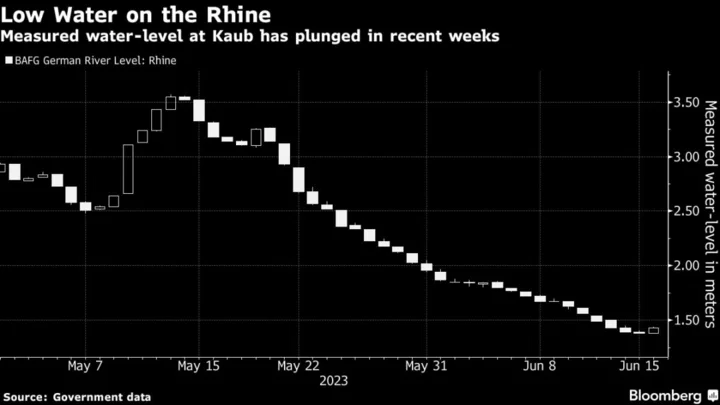
The River Rhine Is Starting to Dry Up Already — Two Weeks Into Summer

Rodrygo FC 24: How to Complete the Trailblazers SBC

Battery prices plummet as electric cars approach ‘tipping point’

Turtle Beach Provides Hundreds of Recon Controllers for Gamers Outreach’s GO Karts Program for Kids in Hospitals