

Google's Privacy Sandbox is finally on its way
It looks like there is finally some movement on Google’s Privacy Sandbox initiative. The initiative,
2023-07-25 04:56

China's Alibaba to scrap cloud unit spinoff in response to US chip curbs
(Reuters) -China's Alibaba Group Holding said on Thursday it will scrap the spin off of its cloud unit in response
2023-11-16 20:16

Calling all gamers: Get a Sony 4K Ultra HD TV and a PS5 for 27% off
Save $1,051.99: As of Aug. 23, you can get a Sony 85" 4K Ultra HD
2023-08-23 23:26

Amazon empowers Alexa with generative AI
Amazon’s popular Alexa digital assistant is about to be supercharged with the powers of generative artificial intelligence, the company said on Wednesday, as the tech giant steps into the AI...
2023-09-21 04:54
Nearly half of all internet traffic is now bots, study reveals
Nearly half of all internet traffic came from bots last year, according to new research. Figures from cyber security firm Imperva revealed a significant increase in automated and malicious web activity in 2022, with the proportion of human traffic falling to its lowest level in eight years. The company noted that so-called “bad bots” were at their highest level since it started tracking the trend in 2013. Bot activity is expected to increase even further this year, the researchers claimed, due to the arrival of generative AI tools like OpenAI’s ChatGPT and Google’s Bard. “Bots have evolved rapidly since 2013, but with the advent of generative artificial intelligence, the technology will evolve at an even greater, more concerning pace over the next 10 years,” said Karl Triebes, a senior vice president at Imperva. “Cyber criminals will increase their focus on attacking API endpoints and application business logic with sophisticated automation. As a result, the business disruption and financial impact associated with bad bots will become even more significant in the coming years.” Bad bot activity can include anything from spam that clogs up email inboxes, to advanced systems that carry out brute force attacks to hack into people’s emails or online accounts. Some bots even mimic human behaviour in order to avoid being detected by security software. Another worrying trend noted in the report was the rise of bots used in warfare, with a 145 per cent spike in automated attacks targeting Ukrainian web applications in early 2022. These were likely designed to disrupt the country’s critical infrastructure, ranging from energy and telecom, to transport and financial sectors. “Every organisation, regardless of size or industry, should be concerned about the rising volume of bad bots across the internet,” said Triebes. “Year-over-year, the proportion of bot traffic is growing and the disruptions caused by malicious automation results in tangible business risks – from brand reputation issues to reduced online sales and security risks for web applications, mobile apps, and APIs.” Read More Why tech bosses are doomsday prepping ChatGPT is finally connected to the web 75% of Irish data watchdog’s GDPR decisions since 2018 overruled – report Nasa’s AI gives ‘30 minutes of advance warning’ before solar superstorms strike Earth
2023-05-15 22:57

New lawsuit claims Elon Musk's Twitter owes more severance to former employees
A former Twitter employee on Wednesday filed a new lawsuit against Twitter and its owner, Elon Musk, alleging that the company failed to provide the full amount of severance it had promised employees prior to mass layoffs last November.
2023-07-13 06:49
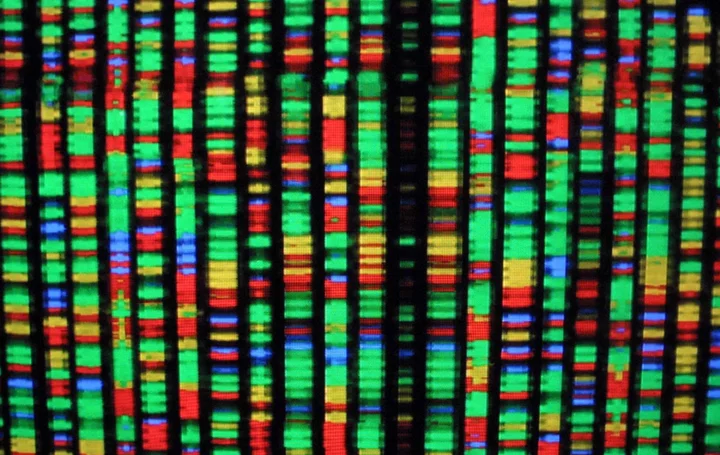
23andMe says hacker appears to have stolen people’s genetic information
A hacker has stolen the personal genetic information of 23andMe users, the company has said. 23andMe allows people to send in a sample of their DNA and have it tested, with the results sent into them. Customers can find out what their genetic information might tell them about their health, for instance, as well as their relatives and where they might have lived. But some of that same information was accessed by hackers and appears to have been made available online, the company said. It made the statement after the hackers appeared to be attempting to sell the information online. 23andMe did not say whether some or all of that data – which included the names of celebrities – was actually legitimate. But it did say that information had been “compiled from individual 23andMe.com accounts without the account users’ authorization”. Its investigation was still continuing, the company said, and it is unclear the scale of the problem. The data appears to have been taken by a hacker who used recycled login credentials from other websites that had since been hacked, the company said. That is a common technique for breaking into profiles, and cyber security experts suggest using different passwords on different websites and changing them regularly to avoid it. Once the hackers were able to get into those accounts, they used a feature on 23andMe that allowed them to gather yet more information. 23andMe offers a tool called “DNA Relatives”, which lets users connect with people with similar genetic information to help assemble their family tree – meaning that hackers were able to gather information about other people whose accounts had not actually been compromised. The company said that it had no indication that its own systems had been attacked, or that it was the source of the credentials used. But it advised people to change their password and set up multi-factor authentication to ensure that their accounts were secure. Read More Earth hit by a huge solar storm that would devastate civilisation, trees show Keir Starmer deepfake shows alarming AI fears are already here New discovery is ‘holy grail’ breakthrough in search for aliens, scientist say
2023-10-10 01:48

Elite Robots to Showcase European Premiere of Powerful CS620 Cobot with 20 kg Payload and 5A Output at Automatica 2023
SHANGHAI--(BUSINESS WIRE)--May 11, 2023--
2023-05-11 14:46

Experts unravel mystery of the Pokémon episode that hospitalised hundreds of kids
Pokémon’s TV series has been delighting animé lovers for more than 26 years, and yet, there’s one episode that even the most diehard of fans may well have missed. The installment, titled Dennō Senshi Porygon (which roughly translates as "Computer Warrior Porygon”) aired in Japan on December 16, 1997. And, after that single, fateful outing, it was never to grace television screens again. The reason for the ban? Reports of a strange health outbreak among children which was linked to a specific scene. The episode follows Ash Ketchum, Pikachu and their pals as they investigate a faulty Poké Ball transfer machine by getting inside it. Once there, the team come under attack, but are saved when Pikachu unleashes one of his high-octane electric outbursts – represented by a barrage of red and blue strobe lights. And that’s where the trouble began. According to scientific paranormal investigator Benjamin Radford and sociologist Robert Bartholomew, who dedicated a study to the event: "At 6:51 PM, the flashing lights of Pikachu's 'attack' appeared on television screens. “By 7:30 PM, according to Japan's Fire-Defense Agency, 618 children had been taken to hospitals complaining of various symptoms." These symptoms included convulsions, nausea and vomiting, with news of the “illness” spreading rapidly throughout the country. Inevitably, it made headlines, with several news broadcasters replaying the offending clip, “whereupon even more children fell ill and sought medical attention,” Radford and Bartholomew wrote. The following day, TV Tokyo issued an apology, suspended the show, and announced an investigation into the cause of the seizures. Meanwhile, video retailers pulled the series from their shelves, and even the then-prime minister Ryuaro Hashimoto expressed concern at the use of rays and lasers in the popular cartoon. Within two days, the number of children reported to have been affected by the flashing sequence increased to around 12,700. And yet, after four months of investigation – with input from health experts and Japanese government officials – no obvious cause could be found for the outbreak and Pokémon returned to the airwaves. Because, although the bright flashes were assumed to be the cause of the health panic, such visual techniques had been used in numerous other animé episodes before, with no reports of any problems. So what was going on here? Well, a tiny fraction of the children who reported being affected were diagnosed with photosensitive epilepsy, with experts concluding that the rapid colour changes during the scene caused them to suffer seizures. However, the bulk of “patients” reported symptoms that had no identifiable “organic” cause and were, instead, consistent with a very different type of condition… Mass hysteria. Radford and Bartholomew attribute this “epidemic hysteria”, in large part, to the mass media, which they say fuelled panic and misinformation. "Many of the children's symptoms had no identifiable organic basis; other than the verified cases of seizures, the symptoms reported were minor and short-lived; the victims were nearly exclusively school children in early adolescence; and anxiety from dramatic media reports of the first wave of illness reports was evident,” they wrote. “Media reports and publicity fuel the hysteria as news of the affliction spreads, planting the idea or concern in the community while reinforcing and validating the veracity of the illness for the initial victims,” they continued. “According to news accounts of the time, the number of children said to be affected remained around 700 the evening of the Pokémon episode and the next day. “The next morning, the episode dominated the Japanese news. Japanese children who had not heard about their peers from the news or from their parents learned of it that morning when the seizures ‘were the talk of the schoolyards’,” they continued. “Once the children had a chance to hear panicky accounts of what had happened through the mass media, their friends and their schools, the number of children reported the next day to have been initially affected – 2 days earlier – increased by 12,000.” Radford and Bartholomew ended their paper by noting that this Pokémon drama offers a warning to us all. They pointed out that our continuing reliance on mass communications, especially TV and the internet, places us at risk of more and more hysteria outbreaks. “Technological innovations are occurring at unprecedented rates and have the potential to influence significant numbers of people beyond the typical number in traditional mass hysteria episodes,” they stressed. “Epidemic hysterias that in earlier periods were self-limited by geography now have free and wide access to the globe in seconds.” Concluding on an ominous note, they added: “The Pokémon illness symptoms are without precedence, given the large numbers affected, and may be a harbinger of future technological hysterias that have the capacity to affect unprecedented numbers of people at a phenomenal speed.” Sign up for our free Indy100 weekly newsletter Have your say in our news democracy. Click the upvote icon at the top of the page to help raise this article through the indy100 rankings.
2023-10-18 17:18

Deutsche Bank completes final phase of Postbank tech integration
FRANKFURT Deutsche Bank on Monday said that it had completed a fourth and final phase of a years-long
2023-07-03 18:51

At least 100,000 could have had data exposed after US health department was hit by global cyberattack
At least 100,000 people could have had their data compromised by a hack of contractors at the Department of Health and Human Services, a department official said Thursday, making it the latest US government agency to be caught up in a sweeping cyberattack connected to Russian cybercriminals.
2023-06-30 05:24

Cyber Firm Check Point Buys Perimeter 81 in $490 Million Deal
Cybersecurity company Check Point Software Technologies Ltd. signed a deal to acquire Perimeter 81 for $490 million in
2023-08-10 23:47
You Might Like...

Manchester United fans hilariously compare Andrew Tate to new player Sofyan Amrabat, Internet dubs soccer star 'bottom G'

UNESCO, Dutch launch project to prepare for AI supervision

Addison Rae to appear in 'War of the Visions: Final Fantasy Brave Exvius' as playable character

When Does Warzone Season 4 End?

Telstra-TPG Telecom network sharing deal blocked by Australia's competition tribunal

'Greed gets you nowhere': Netflix bashed for password sharing ban as Arnold Schwarzenegger's 'FUBAR' releases

Viral Nation Accelerates Growth Strategy with Key Executive Appointments

AI startup SambaNova launches new chip designed for higher quality AI