

Tech Addiction Is Real: How to Cut Back on Screen Time and Wean Off Social Media
How often do you look at your phone a day? According to an Asurion study,
2023-05-13 05:27

Outdid Raises $2.5 Million to Provide Identity Verification in a Private and Trustless Manner
LONDON--(BUSINESS WIRE)--Jun 29, 2023--
2023-06-29 21:26
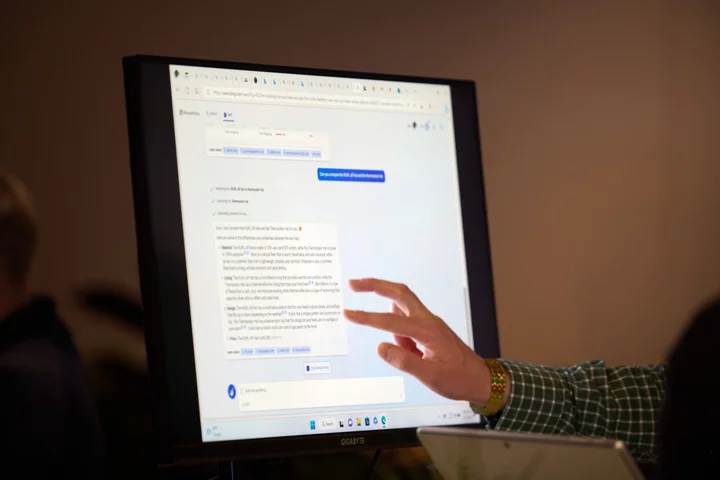
Microsoft Is Bringing OpenAI’s GPT-4 AI model to US Government Agencies
Microsoft Corp. will make it possible for users of its Azure Government cloud computing service, which include a
2023-06-07 21:23

Li-Cycle and Shift2 Partner to Donate Laptops to High School Students in Rochester, New York
TORONTO--(BUSINESS WIRE)--May 25, 2023--
2023-05-26 04:56

Net Zero Insurer Group Tweaks Guidelines Amid Republican Attacks
The Net Zero Insurance Alliance, which has been rocked by claims of antitrust violations by US Republicans, is
2023-07-06 03:57

DIC Graphics Releases Updated Version of DIC Digital Color Guide
TOKYO--(BUSINESS WIRE)--Aug 22, 2023--
2023-08-22 22:20
Scientists find surprise layer of molten rock underneath surface of Mars
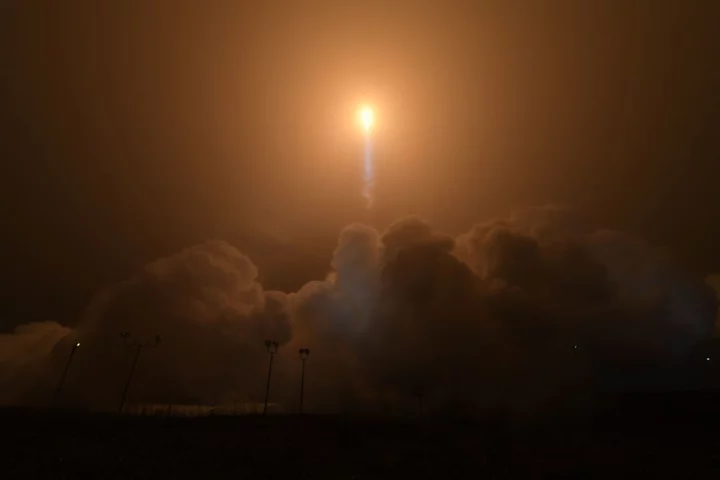
Scientists have been forced to change their understanding of the inside of Mars after a major new breakthrough. Research looking at seismic waves that were generated when Mars was hit by a meteorite impact suggests that it has a previously unknown layer in its deep interior. Those waves were picked up by Nasa’s InSight lander, which was sent to Mars to better understand its seismic activity. The waves that the lander picked up can be used to get a picture of the anatomy of the planet, by watching how they travel around. The new data indicates the presence of a hitherto unknown layer of molten rock surrounding a liquid metallic core - the planet’s innermost component - that is smaller and denser than previously estimated, researchers said on Wednesday. Waves generated by quakes - including those caused by meteorite impacts - vary in speed and shape when journeying through different material inside a planet. Data from InSight’s seismometer instrument has enabled the planet’s internal structure to come into focus. The meteorite impact that occurred in a Martian highland region called Tempe Terra on Sept. 18, 2021, triggered a magnitude 4.2 quake and left a crater about 425 feet (130 meters) wide. It occurred on the opposite side of Mars from InSight’s location in a plains region called Elysium Planitia. “The importance of the far side impact was to produce seismic waves that traversed the deep interior of the planet, including the core. Previously, we had not observed any seismic waves that had transited the core. We had only seen reflections from the top of the core,” said planetary scientist Amir Khan of ETH Zurich in Switzerland, lead author of one of two scientific papers on the new findings published in the journal Nature. The behavior of the waves indicated that previous assessments of the Martian interior were missing something - the presence of a molten silicate layer about 90 miles (150 km) thick surrounding the core. This molten region sits at the bottom of the interior portion of the planet called the mantle. The researchers also recalculated the size of the core, finding that it has a diameter of about 2,080 miles (3,350 km), with a volume about 30% smaller than previously thought. The researchers said the mantle - a rocky layer sandwiched between the planet’s outermost crust and core - extends about 1,055 miles (1,700 km) below the surface. Unlike Mars, Earth has no molten layer around its core. One of the two studies published on Wednesday indicates this layer is fully molten, with the other indicating that most of it is fully molten, with the top portion partially molten. “The molten and partially molten layer is essentially composed of silicates (rock-forming minerals) that are enriched in iron and in radioactive heat-producing elements compared to the overlying solid mantle,” said Henri Samuel, a planetary scientist with the French national research organization CNRS working at Institut de Physique du Globe de Paris and lead author of the second study. The Martian core is made up mostly of iron and nickel, but also has some lighter elements such as sulfur, oxygen, carbon and hydrogen. The researchers concluded that these lighter elements make up about 9-15% of the core‘s composition by weight, lower than previously estimated. “This amount of light elements is not unlike that of the Earth’s core, which is estimated to be around 10%,” Khan said. Mars, the fourth planet from the sun, has a diameter of about 4,220 miles (6,791 km), compared to Earth’s diameter of about 7,926 miles (12,755 km). Earth is almost seven times larger in total volume. NASA retired InSight in 2022 after four years of operations. “We have learned a lot about Mars by studying the unique seismic record provided by the InSight mission,” Samuel said. “Planets are rich and complex systems because they are a place where many different types of processes coexist and act on various spatial and temporal scales, and Mars is no exception.” Additional reporting by Reuters Read More ‘Crystals brought back by Apollo astronauts indicate true age of the Moon’ Researchers reveal source of largest ever Mars quake Scientists investigate after huge shaking seen across Mars Scientists see huge explosion in space – and it could explain life Massive space explosion observed creating elements needed for life Tim Peake: Possibility of all-UK space mission a ‘very exciting development’
2023-10-27 00:56

Spotify Plans New Premium Tier, Expected to Include HiFi Audio
Spotify Technology SA is planning a more expensive subscription option that’s expected to include high-fidelity audio in an
2023-06-20 23:28

Microsoft, Google strategy to test AI search ads irks some brands
By Sheila Dang Alphabet's Google and Microsoft are inserting ads into AI experiments without providing an option to
2023-06-08 18:54
Japan aims to beam solar power from space by 2025
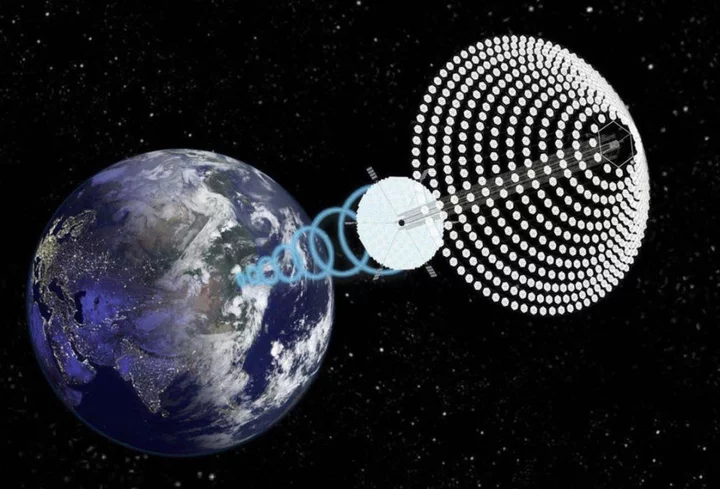
Japan is aiming to become the first country in the world to beam solar energy from space back to Earth to generate electricity at scale. A public-private partnership led by Japanese space agency JAXA will see the first satellite transmitters set up by 2025, according to local reports, The satellites will convert solar power into microwaves and send them to ground-based receiving stations, which then convert it into electrical energy. “If we can demonstrate our technology ahead of the rest of the world, it will also be a bargaining tool for space development with other countries,” Kyoto University professor Naoki Shinohara told Nikkei. The concept, which was first theorised in 1968, has several advantages over terrestrial solar power setups, notably being able to harvest solar energy for much longer, unhindered by the Sun’s typical cycle. Microwaves are capable of passing through clouds, so the technology is also able to operate in adverse weather conditions. Japan has already achieved several firsts in this field, having been the first to transmit power via microwaves in space in the 1980s. In 2015, JAXA scientists followed this up with another breakthrough that saw 1.8 kilowatts of power beamed down to an Earth-based receiver – roughly enough to power an electrical kettle. Several other countries and regions are also working on the technology, with the European Space Agency unveiling a plan last year to test the viability of space-based solar power. The Solaris program aims to make Europe a global leader in this untapped energy resource, with the hope of setting up a development program in 2025. More research still needs to be done before it becomes feasible at a significant scale, though recent advances in high-efficiency solar cells, wireless power transmission and robotic in-orbit assembly mean that China and the US are also working on ways to tap the Sun’s energy from space. Among the concerns surrounding the technology are the health impacts of low-power microwaves on humans, animals and plants. “These are the kind of technical questions that Solaris will look into, to explore further the feasibility of the concept,” Sanjay Vijendran, ESA’s lead for the Solaris proposal, said last year. “As an added plus, any breakthroughs achieved in these areas will be valuable in their own right, applicable to many other spaceflight endeavours.” Read More Scientists break world record for solar power window material Huge ‘plume’ seen coming out of nearby moon that could support alien life Elon Musk meets Chinese foreign minister on first visit for three years Mitigating ‘extinction’ from AI should be ‘global priority’, experts say
2023-05-30 23:45

Who is Blair Featherman? Internet sleuths claim to have identified 'Lakewood Karen' whose racist rant went viral
'Yes, it's true... You have a f**king Mexican party in a pool. Trash!' Featherman allegedly said
2023-07-07 21:29

China urges Japan not to disrupt chip industry after technology curbs take effect
China’s government has appealed to Japan not to disrupt the semiconductor industry after Japanese curbs on exports of chip-making technology took effect, adding to technology restrictions Washington and its allies on security grounds have imposed on Beijing on security grounds
2023-07-24 17:58
You Might Like...

Fortnite Vaults Red-Eye Assault Rifle

Who is CJ Donaldson? Why did MrBeast's brother change his name and career?

Everbridge and Vodafone Power National Warning Day Across Germany

Wind Turbines That Shake and Break Cost Their Maker Billions
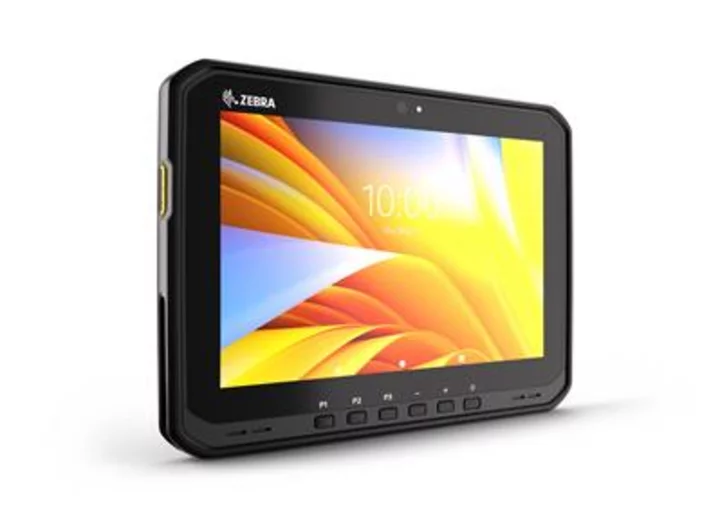
Zebra Technologies’ Latest Android Rugged Tablets, ET6x Series Extend Versatility, Efficiency

Zoom shares jump as CEO says company to develop and deploy AI tools

Miranda Lambert laughs at 'Shoot tequila, not selfies' shirt

Exclusive-China to end Ant Group's regulatory revamp with fine of at least $1.1 billion-sources