
Music Companies Sue Twitter for Alleged Copyright Violations
The National Music Publishers’ Association sued Twitter Inc. Wednesday, alleging it violates the copyright of songwriters by using
2023-06-15 03:57

Apple’s China Demand Remains Firm Heading Into the Holidays. There Is No ‘Growth Demise’.
The latest data on iPhone demand in China should reassure Apple bulls it can keep climbing, according to Wedbush’s Dan Ives.
2023-11-25 00:29

Colin Bower Joins VivoSense as Chief Executive Officer
NEWPORT COAST, Calif.--(BUSINESS WIRE)--Aug 2, 2023--
2023-08-02 20:21
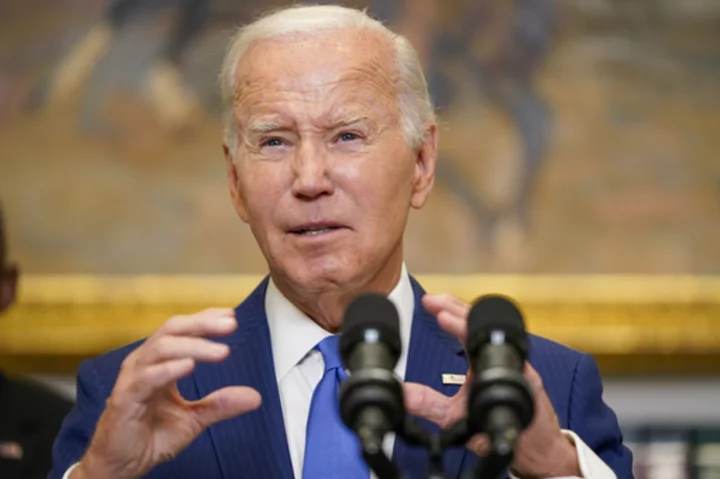
Biden administration cancels loans for former Ashford U. students, with plans to recoup costs
The Biden administration is canceling $72 million in student loans for 2,300 borrowers who say they were cheated by Ashford University, a former for-profit college that was purchased by the University of Arizona in 2020
2023-08-31 04:20

Chinese hackers hacked State, Commerce Depts, Microsoft and US say
By James Pearson and Christopher Bing WASHINGTON/LONDON (Reuters) -Chinese state-linked hackers since May have secretly accessed email accounts at around
2023-07-13 05:52

Final Fantasy 16 faces ban from Saudi Arabia
'Final Fantasy 16' won't be released in Saudi Arabia unless modifications are made.
2023-05-09 20:19

AI Fused With Trade Data May Finally Smooth Clunky Supply Chains
The dawn of artificial intelligence tools like ChatGPT may revolutionize the way both the public and private sector
2023-09-03 14:47

The bizarre 'ice cream so good' video explained
A baffling clip of a woman on a TikTok live stream licking the air and saying “Ice cream so good” while using a straightener to pop single kernels of popcorn has gone viral and people are confused. By now, we all know the internet is filled with weird and wonderful things, but sometimes there are viral videos that are particularly odd and require an explanation. One such video includes a TikTok live video made by @pinkydollreal, who appears to be a 19-year-old Montreal-based user. In it, she appeared to be repeating words like, “yes, yes, yes”, “slay” and “ice cream so good”, while also receiving payments, or “gifts”, from users watching in real-time. Sign up to our free Indy100 weekly newsletter The bizarre clip was shared on Twitter along with the caption, “Any time I accidentally happen upon a TikTok live, I feel like I am watching the world end” and was viewed millions of times, before the person deleted it, explaining they didn’t want @pinkydollreal to receive hate. But, other people have also been sharing the TikToker's content, with one person calling it the “weirdest thing I’ve seen [on TikTok] by far”. What is @pinkydollreal’s content and why does it appear “weird”? The content that TikToker is producing is part of a genre called NPC, or non-playable character. The reference comes from video games and refers to characters that feature but are unable to be controlled by the person playing the game. The niche genre on TikTok sees users like @pinkydollreal imitating an NPC by repeating many of the same phrases and movements in a way that appears programmed and looped. Their behaviour has set patterns and the person rarely deviates from a handful of sayings or actions to imitate a programmed character. Some people pay NPC TikTokers because the content can be considered a fetish. While the content is not overtly sexual, with no nudity or sexual langue, some who are attracted to certain things may find it arousing. Instagram sexual educator Emerson Karsh explained to InsideHook: “A fetish is a little bit more specialized. It’s attraction or arousal or sexual stimulation to certain stimuli, especially if it’s non-sexual. So, like non-sexual body parts, or inanimate objects or non-sexual situations.” Have your say in our news democracy. Click the upvote icon at the top of the page to help raise this article through the indy100 rankings.
2023-07-14 15:23

Male characters in role-playing video games ‘speak twice as much as females’
Male characters in role-playing video games have 50% more dialogue than females, highlighting a “stark gender imbalance” in the gaming genre, scientists have said. In role-playing games (RPGs), the gamer controls one or more characters undertaking quests or missions in an imaginary world. Researchers from the Universities of Glasgow and Cardiff analysed the dialogue of 50 RPGs from 1986 to 2020, including Final Fantasy, Skyrim and Mass Effect. This encompassed 6.2 million spoken words from 13,000 characters. The results, published in the journal Royal Society Open Science, suggest 94% of the games studied had more male dialogue than female dialogue, including ones with multiple female protagonists such as Final Fantasy X-2 or King’s Quest VII. They also found that the proportion of female dialogue is slowly increasing in RPGs at a rate of 6.3 percentage points per decade – from a mean of about 18% in the 1980s to about 40% by 2020. While we expected to find a larger proportion of male dialogue overall, we were surprised to discover how few games - just three of 50 - had more than 50% female dialogue Dr Stephanie Rennick, University of Glasgow However, the researchers said that if this rate were to continue, gender balance would not be reached until 2036. Dr Stephanie Rennick, research associate in philosophy, school of humanities at the University of Glasgow, said: “While we expected to find a larger proportion of male dialogue overall, we were surprised to discover how few games – just three of 50 – had more than 50% female dialogue. “I was also surprised that the lack of female characters compared to their male counterparts persisted at every level, from main player characters through to background NPCs (non-player characters).” For the study, the researchers obtained the transcripts of dialogue used in the games and identified which character said what. Dr Sean Roberts, lecturer at the school of English, communication and philosophy at Cardiff University, said: “We categorised the gender of each character, not assuming binary gender. “This allowed us to count how many words were available for each gender in each game. “For example, we can compare the number of words spoken by female characters to the number of words spoken by male characters.” The researchers found only 35% of words were spoken by female characters and they were more likely to apologise, hesitate or be polite, compared with their male counterparts. They said the proportion of female dialogue ranged from 6% (King’s Quest VI) to 80% (King’s Quest IV: The Perils of Rosella). They discovered one game, Monkey Island, did not pass the Bechdel test, which requires two named female characters to talk to each other about something besides a man. Around half of gamers are female, but they experience a lot of abuse and exclusion. More diverse representation is being called for by players and developers Dr Sean Roberts, Cardiff University The team also found examples of stereotyped gendered behaviour. The researchers said that in Stardew Valley, characters respond differently depending on the player character’s gender. For example, they said, female players are offered a salad, wine, repeatedly described as beautiful and assumed to have little experience of video games, while male players are offered pasta, ale, described as “full of energy” and are assumed to be good video game players. Analysis also showed only 30 out of 13,000 characters belong to the non-binary gender categories, which is about half as much as in real life, the researchers said. Dr Roberts said: “Around half of gamers are female, but they experience a lot of abuse and exclusion. “More diverse representation is being called for by players and developers. “So we hope that developers will consider addressing the imbalances we found in order to create more inclusive games.”
2023-05-24 07:26
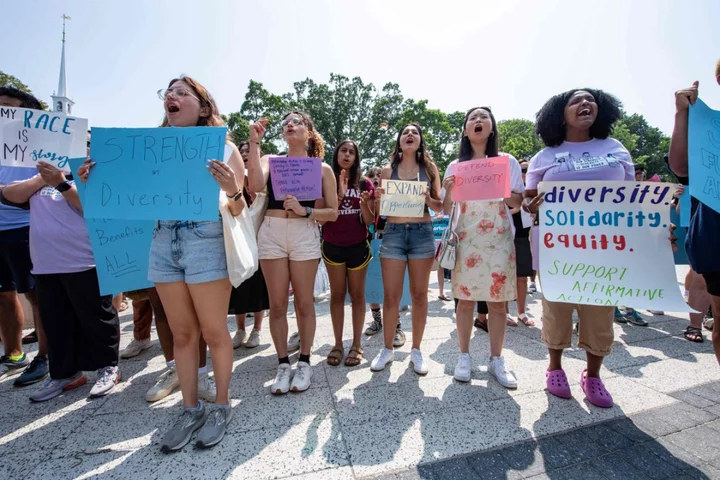
Harvard sued over ‘legacy admissions’ after Supreme Court targets affirmative action
Days after the US Supreme Court struck down race-conscious university admissions, civil rights groups have filed a federal lawsuit targeting so-called “legacy” admissions at Harvard University. The lawsuit, alleging widespread discrimination at the college in violation of the Civil Rights Act, is the latest challenge to the practice of prioritising university admissions for the children of alumni. “There’s no birthright to Harvard. As the Supreme Court recently noted, ‘eliminating racial discrimination means eliminating all of it.’ There should be no way to identify who your parents are in the college application process,” said Ivan Espinoza-Madrigal, executive director of Boston-based Lawyers for Civil Rights, which filed the complaint on 3 July. “Why are we rewarding children for privileges and advantages accrued by prior generations?” he said in a statement. “Your family’s last name and the size of your bank account are not a measure of merit, and should have no bearing on the college admissions process.” The group filed the lawsuit on behalf of the Chica Project, the African Community Economic Development of New England and the Greater Boston Latino Network. Last week, the conservative supermajority on the nation’s highest court ruled that private and public colleges and universities may not consider race as a factor in admissions, striking down the precedent affirmed in the 2003 ruling in Grutter v Bollinger. Civil rights advocates and justices who supported the decades-long precedent, intended to promote racially diverse college campuses, derided what they argue is the court’s ongoing perversion of the 14th Amendment and the foundational concept of equal protection. The latest lawsuit points to Harvard data finding that 70 per cent of the college’s donor-related and legacy applicants are white. So-called “legacy” applicants have a roughly six times greater chance of admission, according to records, pointing to a “custom, pattern and practice” that is “exclusionary and discriminatory” and “severely disadvantages and harms applicants of color,” plaintiffs argued. The complaint calls on the US Department of Education to initiate a federal investigation into Harvard’s application process and for the federal government to declare such practices illegal. “Harvard’s practice of giving a leg-up to the children of wealthy donors and alumni – who have done nothing to deserve it – must end,” Lawyers for Civil Rights litigation fellow Michael Kippins said in a statement accompanying the complaint. Following the Supreme Court ruling, Democratic lawmakers and President Joe Biden urged universities to reconsider their legacy admissions, which he said “expand privilege instead of opportunity.” The Independent has requested comment from Harvard. Read More Biden condemns Supreme Court striking down affirmative action: ‘This is not a normal court’ Biden reveals ‘new path’ to student debt relief after Supreme Court strikes down president’s plan Pence ‘doesn’t believe’ racial inequality exists in schools as he celebrates SCOTUS affirmative action ban
2023-07-03 22:57

KIOXIA First to Launch Data Center NVMe E3.S SSDs on Hewlett Packard Enterprise Systems
SAN JOSE, Calif.--(BUSINESS WIRE)--May 16, 2023--
2023-05-16 21:25

The Bizarre Mystery of Virginia's 'TV Fairy'
In 2018, a mysterious stranger left roughly 20 vintage television sets at random doorsteps in Virginia. Then they struck again.
2023-06-16 01:19
You Might Like...

ChatGPT traffic spikes as students return to school

Russia fines Apple for not deleting 'inaccurate' content on Ukraine conflict

Save 49% on the best VPN for 'Genshin Impact'
Where to watch Northwestern vs Duke livestream

Why Is TV Called the ‘Boob Tube’?

Standard Chartered bumps up bitcoin forecast to $120,000

Instagram 'most important platform' for child sex abuse networks: report

Deutsche Bank Executive Warns of Growing ‘Fat Tail’ ESG Risk