
Futuristic concrete could transform roads and homes into giant batteries
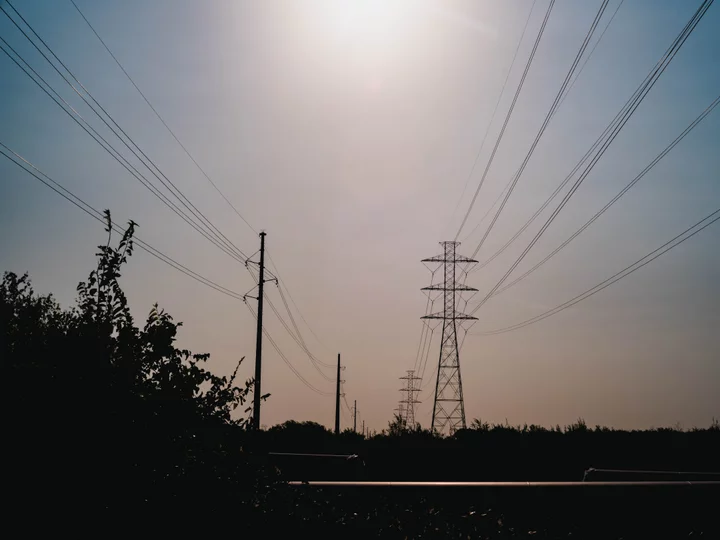
A next-generation energy storage system made of cement and an ancient ink has the potential to massively scale-up renewable energy operations by transforming homes and roads into giant batteries, according to the scientists who invented it. A team from the Massachusetts Institute of Technology (MIT) and the Wyss Institute in the US unveiled the design on Monday, claiming that supercapacitors made of this material have “great potential” to assist in the world’s transition to clean energy. “The material is fascinating because you have the most-used man made material in the world, cement, that is combined with carbon black, that is a well-known historical material – the Dead Sea Scrolls were written with it,” said MIT professor Admir Masic, who was involved in the research. “You have these at least two-millennia-old materials that when you combine them in a specific manner you come up with a conductive nanocomposite, and that’s when things get really interesting.” The concrete mix of cement and carbon black only requires water, making it a low-cost alternative to other energy storage systems being developed to allow energy networks to remain stable despite fluctuations to renewable energy sources like solar, wind and tidal power. The researchers say their supercapacitor could be used in the concrete foundations of a house to provide an entire day’s worth of energy without adding any additional construction costs. It could even eventually be used on concrete roadways to provide contactless recharging for electric cars as they travel. “There is a huge need for big energy storage,” said MIT professor Franz-Josef Ulm. “That’s where our technology is extremely promising, because cement is ubiquitous... [It] offers a new way of looking toward the future of concrete as part of the energy transition.” Early applications will likely be with isolated homes or buildings equipped with solar panels that do not have access to grid power. The concrete mixture can also be adjusted to serve other uses, the scientists noted, such as heating systems. A paper detailing the research, titled ‘Cement supercapacitors as a scalable energy storage solution’, was published in the journal Proceedings of the National Academy of Sciences on Monday. Read More Hundreds of years after it was discovered, one material is about to change the world Battery breakthroughs are about to trigger a transport revolution
2023-08-01 03:17
MrBeast's 6M calorie burger sets Guinness World Record. How and where to watch YouTuber's challenge?
The only way to access the 'secret' challenge video is by purchasing any of the Feastables products offered by MrBeast
2023-06-13 18:25
AI-Q boosting is the latest career trend, according to LinkedIn
With the rise of AI, this technology is also now also impacting the workplace with a new AI-Q boosting career trend emerging as a result, according to LinkedIn. Despite the fact LinkedIn research found that over a third (36 per cent) of Brits admit feeling overwhelmed by AI, employees are embracing the tech, with 57 per cent saying they want to learn more. One example of this is over half (56 per cent) have already taken steps to boost their ‘AI-Q’, mainly through practical experience - including experimenting with GenAI tools such as ChatGPT (22 per cent) - as two thirds (65 per cent) believe AI is going to help advance their career. To help employees boost their AI-Q, LinkedIn has unlocked the most popular AI courses for free until the end of the year - you can find the full list here. Brits boosting their ‘AI-Q’ score British workers are eager to tackle this challenge head-on, but some employers are yet to keep up with a technology that has left people feeling overwhelmed, The majority (66 per cent) of UK workers have been provided with no formal AI training, and 45 per cent want to learn more, even if they don’t know where to start. Over half (56 per cent) have already taken steps to boost their ‘AI-Q’, through practical experience - including experimenting with Gen AI tools such as Chat GPT (22 per cent) - or reaching out to friends and colleagues for advice (16 per cent). Yet still, many feel that they’re falling behind. In terms of AI knowledge, 30 per cent - of professionals think their colleagues know more about AI than they do, and over a quarter (26 per cent) have even pretended they know more about AI to appear ‘in the know’ in front of teammates, showing there is still a confidence gap to be bridged. Career benefits are front of mind Brits are boosting their AI-Q with a clear goal in mind - to advance their careers and a whopping 76 per cent say they are excited to use AI in their work, while 65 per cent believe it will help move their career forward. The research finds that UK workers see AI as a tool that will help them focus on what they do best and be more productive. Half (51 per cent) are planning to use AI to say goodbye to boring work tasks, and 42 per cent admit it will spare them their blushes as they can use AI tools to answer the questions they’re too embarrassed to ask their colleagues. A further 40 per cent plan to help solve conflicts by asking advice on difficult scenarios at work. Employees predict interpersonal skills such as communication (48 per cent), adaptability (48 per cent) and problem-solving (46 per cent) will become even more important as AI grows in prominence. And with LinkedIn’s own data showing that since November last year, there has been a 21x global increase in English-language jobs mentioning new AI technologies such as Chat GPT, feeling more comfortable with AI could be an important step for those looking to develop their career. LinkedIn Career Expert, Charlotte Davies, says: “Hot off the heels of the pandemic, once again professionals are adapting to another wave of change as AI becomes more prominent in the workplace. It’s understandable that getting up to speed can feel overwhelming, but it’s positive to see people are embracing the shift and focusing on the many benefits AI technology can bring to their working lives, including more time to focus on the work they care about and helping with career progression. It’s also clear that people are eager to learn more about AI. We’re seeing a significant increase in conversations on LinkedIn, with members already adding AI skills to their profiles, but our data also highlights the enormous value of soft skills and how important these will be for the future as we continue to navigate this new tech and the change it brings.” Top tips Whether you’re AI-advanced or AI-anxious, taking the plunge can help you in your career and job, and LinkedIn’s Career Expert Charlotte Davies shares some advice to get you started: Learn the lingo: Having the language to talk about and understand AI will put you ahead of the curve. Study up on popular AI skills with resources like LinkedIn Learning where you can find the most popular AI courses unlocked for free until the end of the year. A good place to start is with How to Research and Write using generative AI, and What is generative AI and you can find the full list here. Embrace the experts and tap into your network: Reach out to your network to share learnings and stay up to speed on AI by following thought leaders and subject matter experts on LinkedIn, including Allie Millerand Greg Coquillo. Sharpen up your soft skills: Don’t underestimate the importance of showcasing your soft skills as AI continues to change the way we work. LinkedIn data in our AI at Work report shows that the skills required for many global jobs have changed by a staggering 25% since 2015, and with AI accelerating these shifts, people can expect their jobs to change even more quickly, with the skills required for many jobs will change by reaching at least 65% by 2030.The top skills anticipated to be most in demand: problem solving, strategic thinking and time management. Take advantage of existing tools: Use AI tools already available to you on LinkedIn including collaborative articles — knowledge topics published by LinkedIn with insights and perspectives added by the LinkedIn community. These articles begin as AI-powered conversation starters, developed with our editorial team. Next, with the help of LinkedIn's Skills Graph, the team connects each article with subject experts who contribute with their advice and insights. Microsoft’s WorkLab Guides also give helpful tips from how to use AI to dominate your task list to how to make in-person time count for your team Acknowledge your AI worries: It’s okay to feel a little nervous or overwhelmed with new technology! People felt similarly when the internet was introduced and it’s important to remember that these changes don’t happen overnight. These are long-term changes and you can do the work to be part of the change, not just be impacted by the change of AI. Sign up to our free Indy100 weekly newsletter Have your say in our news democracy. Click the upvote icon at the top of the page to help raise this article through the indy100 rankings.
2023-09-14 00:56
Australian PM Faces Deteriorating Polls Even After China Success
Australian Prime Minister Anthony Albanese is confronting falling approval ratings midway through his first term, with an increasingly
2023-11-15 12:27
NFL, NBA Subreddits Shut Down as Part of Reddit Protest
The sports subreddits are shutting down in protest.
2023-06-12 22:53
LinkSquares Reinforces Commitment to Legal Buyers with Introduction of Enterprise Legal Management Platform
BOSTON--(BUSINESS WIRE)--May 16, 2023--
2023-05-16 21:26
The biggest assistive technology and accessibility triumphs of 2023 (so far)
Only halfway through and the year's already been a whirlwind of both technological advancements and
2023-06-11 17:52
Kingston Digital Expands External SSD Lineup
FOUNTAIN VALLEY, Calif.--(BUSINESS WIRE)--Sep 5, 2023--
2023-09-05 21:48
How to Get Yuji Itadori for Free in Fortnite
Leaks suggest players will be able to get Yuji Itadori for free in Fortnite by unlocking the skin in a special Jujutsu Kaisen Battle Pass.
2023-08-04 02:54
'Categories are getting worse': 'Jeopardy!’ producers slammed for introducing 'most risque category title’ and tricky questions
'Jeopardy' has been facing a lot of criticism recently and the latest reason is the new category of questions
2023-06-11 11:53
Embarrassing Facebook glitch exposes users ‘stalking’ strangers
Meta has apologised for a glitch in which Facebook sent friend requests to every profile that a user had viewed — leaving a number of users embarrassed and rushing to delete the requests, or, in some cases, their entire accounts. “We fixed a bug related to a recent app update that caused some Facebook friend requests to be sent mistakenly,” a spokesperson for Meta told The Daily Beast. “We’ve stopped this from happening and we apologise for any inconvenience this may have caused.” According to accounts on other social media platforms like Twitter, it caused plenty of inconvenience. “As someone with a severe nosiness problem, this Facebook auto friend request glitch is very spooky and uncool with me,” one Twitter user with the username Lucy wrote. Last Friday, following a Facebook app update, users began sending out a stream of warnings on other social media platforms about the dangers of using the platform when their “nosiness” could be exposed to the very people whose profiles they’d been viewing. The Daily Mail quoted one social media user as writing that the glitch amounted to the “end of stalking.” Now that Meta has fixed the glitch, there is presumably less need to worry. For some, however, the damage may be done. “Facebook update s*cks!” another Twitter user wrote. “It automatically sent a friend request to account you stalked, lmao Imagine you stalked your ex or your enemy and they received a friend request notification.” There was some question over whether the glitch affected Apple phone users in the same way that it did Android users, but the glitch likely is not good news for a platform that has struggled to maintain the attention and affection of younger social media users who have migrated to platforms like Snapchat and TikTok in recent years.
2023-05-19 07:19
Nasa’s new AI gives ‘30 minutes of advance warning’ before killer solar superstorms strike Earth
Nasa has built an artificial intelligence model to predict where on Earth an impending solar storm would strike, a new system that scientists said can provide “30 minutes of advance warning”. The AI model analyses Nasa satellite data to raise the alarm on dangerous space weather, said researchers from the American space agency’s Goddard Space Center. The warning may provide just enough time for countries to prevent severe impacts of these storms on power grids and other critical infrastructure, according to the new study published recently in the journal Space Weather. Solar storms are caused when the Sun emits a burst of electrically charged plasma in what is called a coronal mass ejection. These charged particles create so-called geomagnetic storms that may cause blackouts and technological malfunctions of instruments on Earth as they interfere with the protective magnetic field around the planet. While these storms range from mild to extreme, their effects could become increasingly disruptive in a technologically dependent world. For instance, a solar storm in 1989 caused blackouts across Quebec, Canada for 12 hours, plunging millions into the dark and closing schools and businesses. Another popular solar superstorm event known as the Carrington Event sparked fires at early telegraph stations in 1859 that prevented messages from being sent. Scientists warned that the risk of such a devastating solar storm is increasing as we approach the next “solar maximum” – a peak in the Sun’s 11-year activity cycle. To prevent such a devastation, Nasa scientists developed the new AI model to identify links between solar wind measurements from previous Sun missions and geomagnetic disturbances observed at ground stations across Earth. The computer model they developed, called DAGGER, can quickly and accurately predict geomagnetic disturbances worldwide, “30 minutes before they occur,” researchers said. When they tested the model against two geomagnetic storms that happened in August 2011 and March 2015, it was able to “quickly and accurately” forecast the storm’s impacts around the world. The new prediction system is the first to combine swift analysis of AI, with real measurements from space and across Earth to generate frequently updated predictions. Scientists believe the early warning provided by the system can help take action to protect infrastructure from an impending solar storm, such as temporarily taking sensitive systems offline or moving satellites to different orbits. Read More Stunning aurora lights up skies over Australia: ‘Brightest one I’ve ever seen’ How a severe solar storm could leave a lasting impact on our world The world is not yet ready to overcome a once-in-a-century solar superstorm, warn scientists Astronomers find ‘objects that no one has ever seen before’ Saturn’s rings are no more than 400 million years old – study Strange sounds recorded by balloons in stratosphere leave scientists puzzled
2023-05-15 13:21
You Might Like...
WhosImmortal Reveals Underrated SMG With the 'Best TTK' in Warzone
Twitter is in negative cash flow due to 50% drop in advertising revenue, says Elon Musk
Qualcomm forecasts beast estimates, shares rise as smartphone slump eases
Intel Hit by $400 Million Fine as Clash With EU Rumbles On
US Opens Talks With Global Gas Heavyweights on Emission Tracking
Pineapple 'needles' revelation has people questioning whether they'll eat the fruit again
Elaborate 'Entrance to Hell' discovered underneath a church
Musk reaffirms tweet-reading limits put due to data scraping