
Part of the sun is broken and scientists are baffled
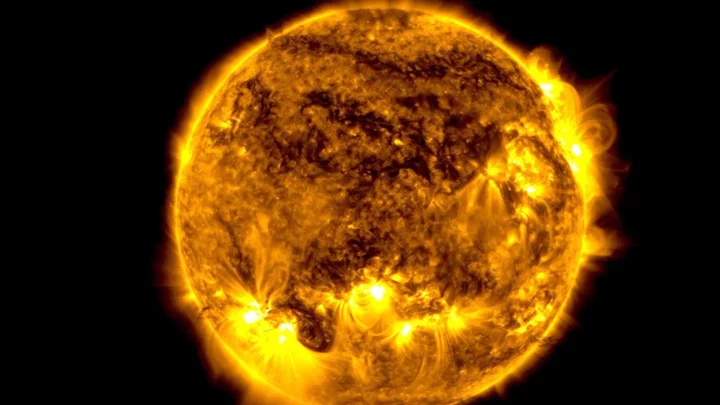
We don’t want to alarm anyone, but the sun is broken. A section of the sun has left the surface and begun circulating around the top of the star as if it were a huge polar vortex, and it’s not exactly clear why it’s happened. The observation was made possible thanks to the James Webb Space Telescope, and its no surprise that it piqued the interests of scientists everywhere. Tamitha Skov is a space weather physicist who regularly shares updates on social media, and she seemed incredibly excited about the latest developments. Sign up for our free Indy100 weekly newsletter “Talk about Polar Vortex! Material from a northern prominence just broke away from the main filament & is now circulating in a massive polar vortex around the north pole of our Star,” she wrote. “Implications for understanding the Sun's atmospheric dynamics above 55° here cannot be overstated!” Solar prominences consist of hydrogen and helium, and they extrude from the sun’s service releasing plasma. While there’s confusion around the cause of the phenomenon, it could be related to the reversal of the sun’s magnetic field, as well as the fact that something expected has been known to happen when the sun reaches a 55 degree latitude in every 11-year solar cycle. Solar physicist Scott McIntosh, who is the deputy director at the National Center for Atmospheric Research in Boulder, Colorado told Space.com: "Once every solar cycle, it forms at the 55 degree latitude and it starts to march up to the solar poles. “It's very curious. There is a big 'why' question around it. Why does it only move toward the pole one time and then disappears and then comes back, magically, three or four years later in exactly the same region?" Have your say in our news democracy. Click the upvote icon at the top of the page to help raise this article through the indy100 rankings.
2023-08-30 22:59
We tested the 5 best mechanical keyboards for business and pleasure
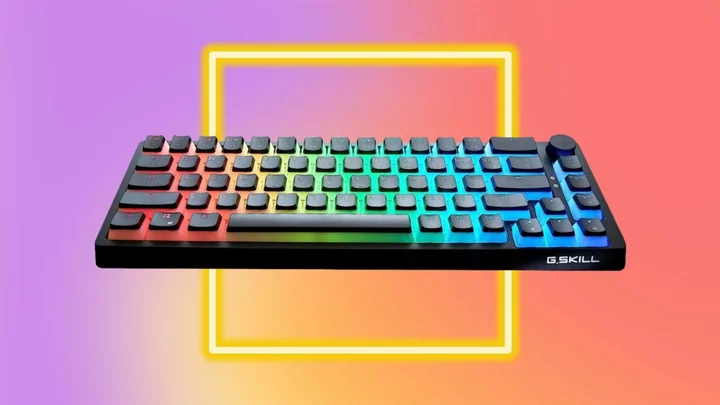
Sorry to be the one to tell you, but membrane keyboards are so passé. A
2023-07-19 17:54
Virtual reality could help improve heading skills amid new restrictions – study
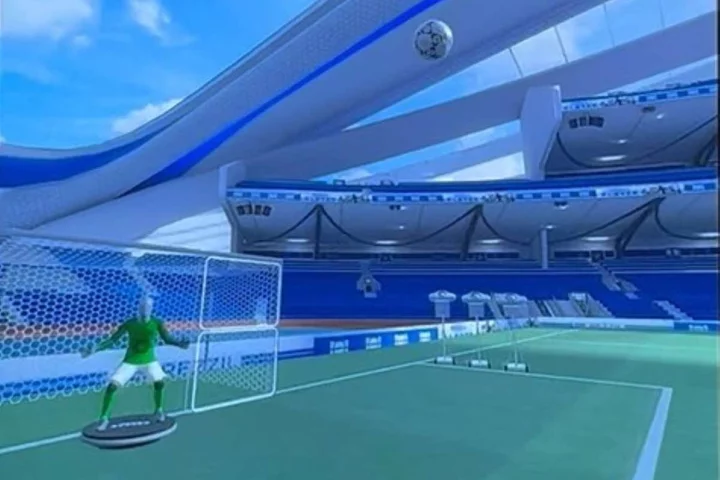
Virtual reality could help footballers improve their heading without the repetitive head impacts from a ball, a new study indicates. Players involved in a study at Manchester Metropolitan University’s Institute of Sport and its Department of Sport and Exercise Sciences demonstrated greater performance in ‘real world’ heading after training with a VR headset compared to a control group who did no training. The VR group also reported greater self-confidence and efficacy in their heading compared to the control group, the study found. Our findings show that virtual reality (VR) based training can be used to improve real-world heading performance. Dr Ben Marshall, Manchester Metropolitan University Institute of Sport The study, titled: ‘A preliminary investigation into the efficacy of training soccer heading in immersive virtual reality’, has been published in the journal Virtual Reality on Tuesday. It provides some insights into how players may be able to improve heading technique amid restrictions on training. Football Association guidelines advise against any heading training in under-12s, while a trial is ongoing in the current season and next season to eliminate deliberate heading completely from matches up to and including that age group. At ages 12 and 13, heading should be limited to a single session of no more than five headers, and no more than 10 headers per session for children aged 14 to 17, according to FA guidance. Even in adult football at all levels, players are advised to perform only 10 ‘higher force headers’ per training week, such as headers from crosses, corners, free-kicks and returning of goal kicks. The exposure to heading has been limited because of concerns over the sub-concussive impact of repetitive heading on a player’s longer-term wellbeing. The 2019 FIELD Study found professional footballers were three and a half times more likely to die of neurodegenerative disease than age-matched members of the general population. “With increasing restrictions of heading exposure to professional and youth soccer, it is evident that alternative methods for training heading confidence and technique will be required while it remains an integral part of the game,” the VR paper concluded. “The work presented here provides some initial evidence suggesting that immersive VR may have a place in any new approach to training this important skill.” A group of 36 adult recreational-level players, made up of 30 men and six women, participated in the study in total. The 36 were split into two groups of 18, with 16 men and two women in the control group who did not use the VR headsets between ‘real world’ heading sessions, and 14 men and four women in the VR group. The VR group used the Oculus Quest 2 head-mounted display, with the Rezzil Player 22 application used to provide the VR football heading training. Dr Ben Marshall, Lecturer in Sport and Exercise Psychology at the Manchester Metropolitan University Institute of Sport, said: “Our findings show that virtual reality (VR) based training can be used to improve real-world heading performance and that this method is more effective than not training the skill at all. “This is important as current training guidelines recommend limiting the number of physical headers performed in training for all age groups due to the associated long-term risks to player health. “Our findings suggest the inclusion of VR-based training could play an important role in developing football heading skills whilst reducing the number of real-world headers and sub-concussive head impacts that players need to be exposed to – which is really positive.”
2023-06-06 07:21
Assassin’s Creed: Mirage's much shorter playtime revealed
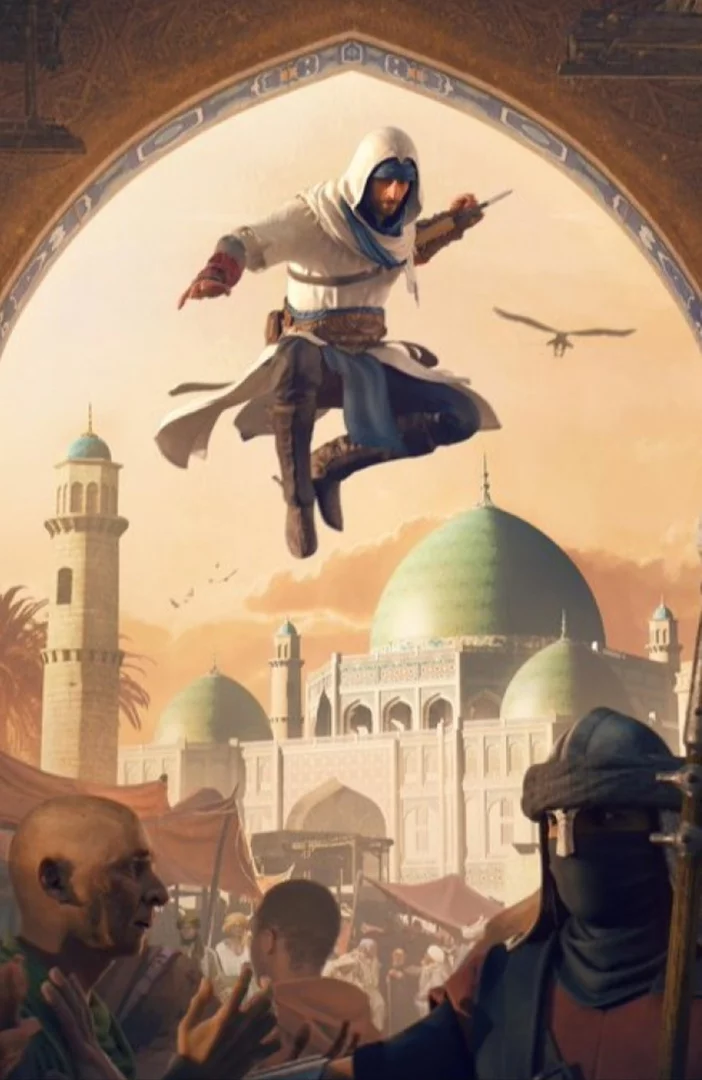
'Assassin’s Creed: Mirage' will be a third of the length of 'Assassin’s Creed: Valhalla'.
2023-07-31 20:20
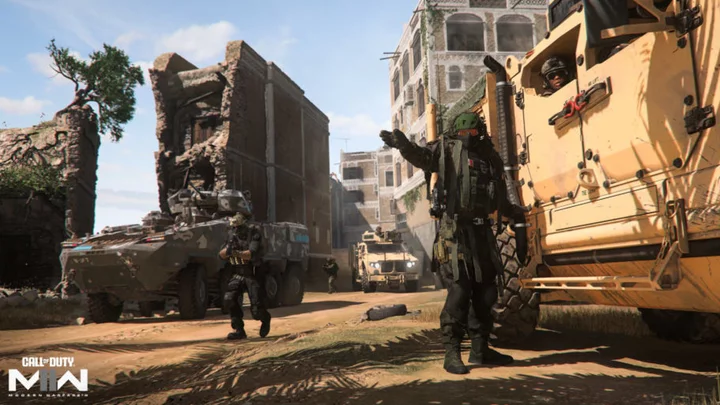
When is the Modern Warfare 3 Reveal Event?
The Modern Warfare 3 reveal event will take place in Warzone Season 5 on Aug. 9 to give the community more information surrounding Call of Duty 2023.
2023-07-19 00:49
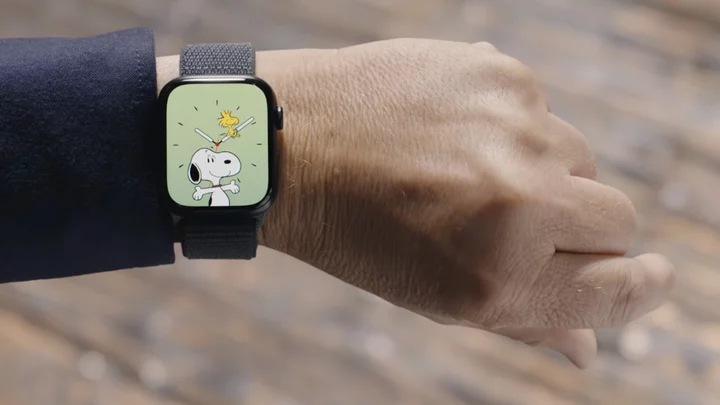
Is Apple's new double tap feature really that new?
Apple's annual iPhone launch event saw new iPhone colors, a resigned shift to USB-C charging
2023-09-13 07:28
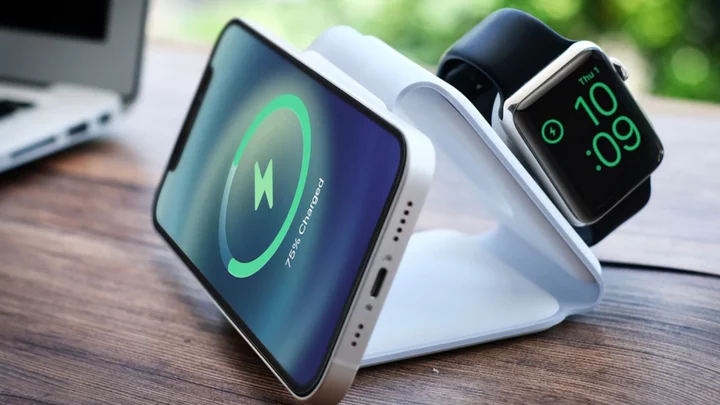
This folding wireless charging station can power 3 devices at once for $45
TL;DR: As of May 11, you can pick up the MagStack Foldable 3-in-1 Charging Station
2023-05-11 17:49
Here are all the best Doordash promo codes you can redeem this week
Summer temps are soaring, which means this might be prime time for you to stay
2023-07-29 04:48
Google is about to ditch passwords forever
Google has announced that its apps and services will now be “passwordless by default” in an effort to make all users switch to passkeys. The move is part of a broader consensus among the tech industry to ditch passwords, which have been around since the 1960s, and switch to a safer and more efficient format to verify a person’s identity. Passkeys combine a code with biometric information like a fingerprint or facial recognition, making them easier to remember and harder to be stolen. Google apps like YouTube, Search and Maps all support the new format after it was first introduced earlier this year, though take up has been slower than expected. The tech giant said the push to get users to adopt passkeys coincided with Cybersecurity Awareness Month, claiming that the new technology is faster and more secure. “They are 40 per cent faster than passwords – and rely on a type of cryptography that makes them more secure,” Google product managers Sriram Karra and Christiaan Brand wrote in a blog post explaining the move. “We’ll continue encouraging the industry to make the pivot to passkeys – making passwords a rarity, and eventually obsolete.” Google users who do not already use passkeys will receive a prompt to set one up the next time they sign into their account. Passkeys have already been enabled by other online platforms, including eBay and Uber, as the tech industry looks to completely transition away from traditional passwords. “We’ve seen great results from launching passkeys across our apps and encourage all users to adopt passkeys,” said Ramsin Betyyousef, a senior director of engineering at Uber. “Ultimately this is a win-win for Uber and Uber’s customers.” Google, which counts billions of users across all of its platforms, acknowledged that “new technologies take time to catch on”, and have therefore given people the option to temporarily opt out of passkeys and use passwords wherever possible. The company did not set a date for when passwords will be phased out entirely, but some security experts contend that their death is inevitable while hackers continue to exploit their vulnerability. Helping implement the transition is the FIDO (Fast Identity Online) Alliance, which has been working with Apple, Google, Microsoft and hundreds of tech companies to develop the new login standard. “The complete shift to a passwordless world will begin with consumers making it a natural part of their lives,” said Alex Simons, who heads Microsof’s Identity Program Management team. “By working together as a community across platforms, we can at last achieve this vision and make significant progress toward eliminating passwords.” Read More Pixel 8: Google unveils ‘AI-centred’ iPhone rival Google to trial AI in UK traffic light systems to reduce stop-and-go emissions Pixel 8: Google unveils DeepMind-powered iPhone rival China’s discovery of never-before-seen ore could propel battery technology
2023-10-11 18:21
AI pioneer warns UK is failing to protect against ‘existential threat’ of machines
One of the pioneers of artificial intelligence has warned the government is not safeguarding against the dangers posed by future super-intelligent machines. Professor Stuart Russell told The Times ministers were favouring a light touch on the burgeoning AI industry, despite warnings from civil servants it could create an existential threat. A former adviser to both Downing Street and the White House, Prof Russell is a co-author of the most widely used AI textbook and lectures on computer science at the University of California, Berkeley. He told The Times a system similar to ChatGPT – which has passed exams and can compose prose – could form part of a super-intelligence machine which could not be controlled. “How do you maintain power over entities more powerful than you – forever?” he asked. “If you don’t have an answer, then stop doing the research. It’s as simple as that. “The stakes couldn’t be higher: if we don’t control our own civilisation, we have no say in whether we continue to exist.” In March, he co-signed an open letter with Elon Musk and Apple co-founder Steve Wozniak warning of the “out-of-control race” going on at AI labs. The letter warned the labs were developing “ever more powerful digital minds that no one, not even their creators, can understand, predict or reliably control”. Prof Russell has worked for the UN on a system to monitor the nuclear test-ban treaty and was asked to work with the Government earlier this year. “The Foreign Office … talked to a lot of people and they concluded that loss of control was a plausible and extremely high-significance outcome,” he said. “And then the government came out with a regulatory approach that says: ‘Nothing to see here… we’ll welcome the AI industry as if we were talking about making cars or something like that’.” He said making changes to the technical foundations of AI to add necessary safeguards would take “time that we may not have”. “I think we got something wrong right at the beginning, where we were so enthralled by the notion of understanding and creating intelligence, we didn’t think about what that intelligence was going to be for,” he said. We've sort of got the message and we're scrambling around trying to figure out what to do Professor Stuart Russell “Unless its only purpose is to be a benefit to humans, you are actually creating a competitor – and that would be obviously a stupid thing to do. “We don’t want systems that imitate human behaviour… you’re basically training it to have human-like goals and to pursue those goals. “You can only imagine how disastrous it would be to have really capable systems that were pursuing those kinds of goals.” He said there were signs of politicians becoming aware of the risks. “We’ve sort of got the message and we’re scrambling around trying to figure out what to do,” he said. “That’s what it feels like right now.” The government has launched the AI Foundation Model Taskforce which it says will “lay the foundations for the safe use of foundation models across the economy and ensure the UK is at the forefront of this pivotal AI technology”. Read More ChatGPT creators try to use artificial intelligence to explain itself – and come across major problems Artificial intelligence could ‘transform’ heart attack diagnosis, scientists say Hackers aim to find flaws in AI - with White House help ChatGPT user in China detained for creating and spreading fake news, police say Charity boss speaks out over ‘traumatic’ encounter with royal aide Ukraine war’s heaviest fight rages in east - follow live
2023-05-13 21:51

Luigi's Mansion 2 HD Release Date
Here's when Luigi's Mansion 2 HD will come out.
2023-09-19 05:46
Art fans shocked after spotting 'Sputnik satellite' in 400 year old religious painting
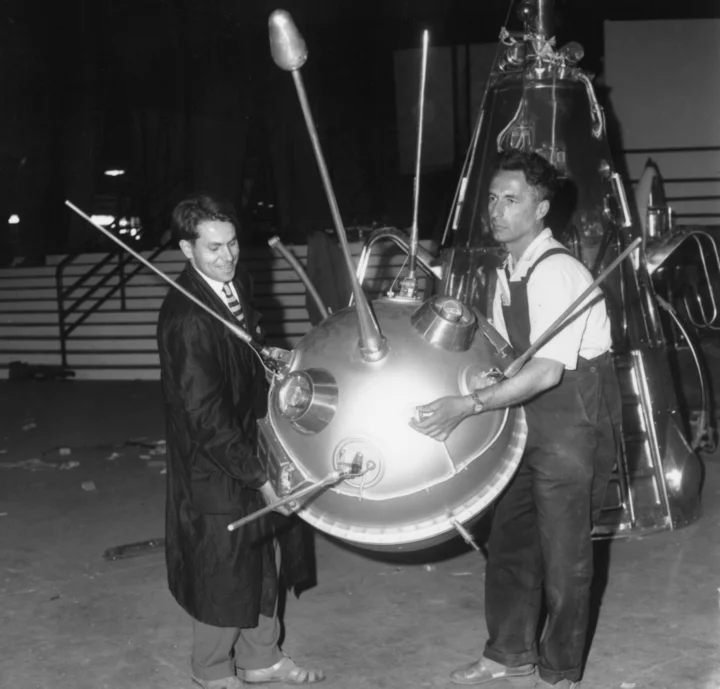
Time travel, or just an illusion? Eagle eyed art lovers have spotted what appears to be a satellite in a four-century old painting of Jesus Christ. The Father, the Son and the Holy Ghost are depicted in the ‘Glorification of the Eucharist’, a painting by Ventura Salimbeni from 1595. But in the background is something surprising – a blue sphere with spikes sticking out of it, which some people have interpreted as Sputnik, the first satellite to orbit the Earth in 1957. Sign up to our free Indy100 weekly newsletter Steve Mera, chairman of the Manchester Association of Paranormal Investigation & Training (MAPIT) and a paranormal specialist and lecturer, said at a conference: “You start to find a lot of religious connotation linked in with the UFO phenomenon. “This painting [the Eucharist] was painted in the 1600s and nobody ever really knew what that was a painting of, until we kind of looked at Sputnik, which was the first satellite to pass round the Earth,” he said. “What is really, really interesting is it is surprisingly similar to Sputnik, even to the point there is a little nodule there (on Sputnik) and the exact same nodule on the side there [on the object in the painting].” Clearly, Salimbeni wouldn’t have known about Sputnik. Or would he…? Mera added: "Did they somehow have knowledge of future events?" Well, we can probably assume not. Instead, experts think the ball is a representation of the so-called celestial sphere (or the universe), while the spikes indicate God’s power over it. But for conspiracy theorists, it’s yet another win for time travel. Have your say in our news democracy. Click the upvote icon at the top of the page to help raise this article through the indy100 rankings.
2023-07-23 23:23
You Might Like...

Opinion: Intel Surpasses First 2030 Goal: $2 Billion in Diverse Supplier Spending
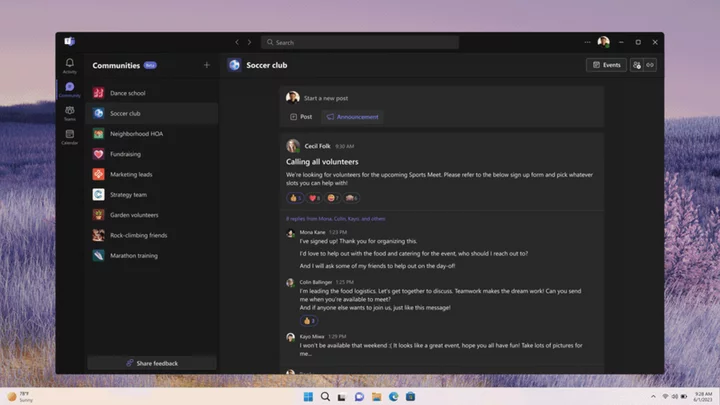
Microsoft Teams on Windows 11 Gets Discord-Like Communities Feature
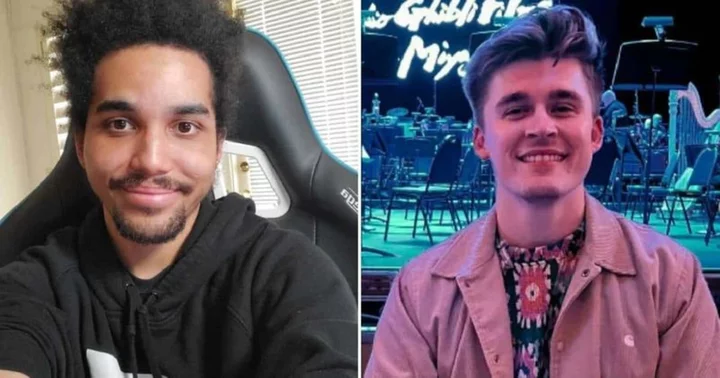
VoiD triumphs as 'World's Greatest Gamer' in Ludwig's epic event, fans dub him 'GOAT'
UK Insurance Group Pushes Members to Act on Biodiversity Loss
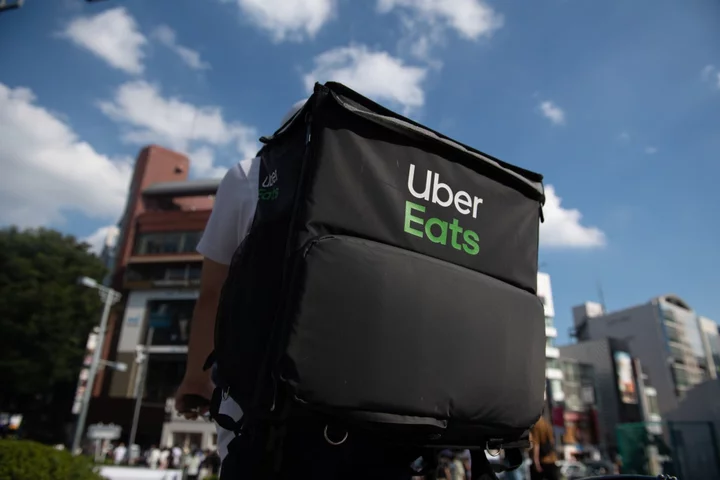
Uber Eats’ New AI Chatbot Will Offer Recommendations to Customers
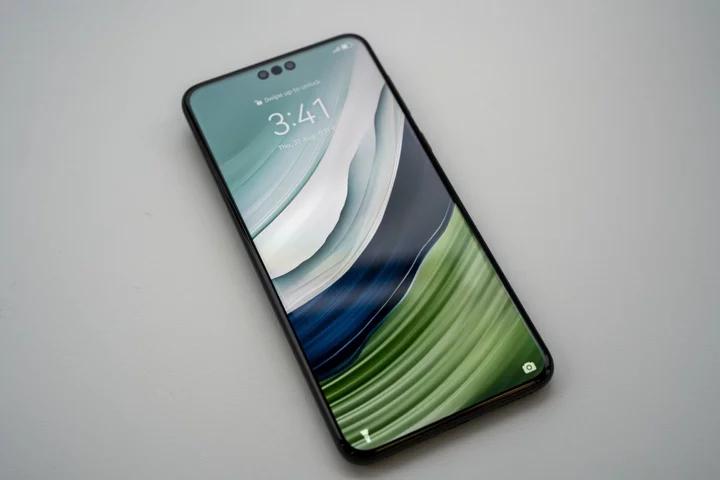
US Seeks Details on Made-in-China Huawei Chip as Debate Grows

SESTEK and ccc Sign MoU to Improve Performance of Call Centers With AI

Northern Europe’s Cool Spell Shifts to Warmer Weather by Weekend