

Is xQc leaving Twitch for Kick? Star streamer claims CEO Dan Clancy is happy about his deal: 'Nobody's upset'
'I'm just diversifying, and that this is just how it's going to be,' the streamer explained, debunking the notion that he was 'upset' with Twitch
2023-06-17 15:19
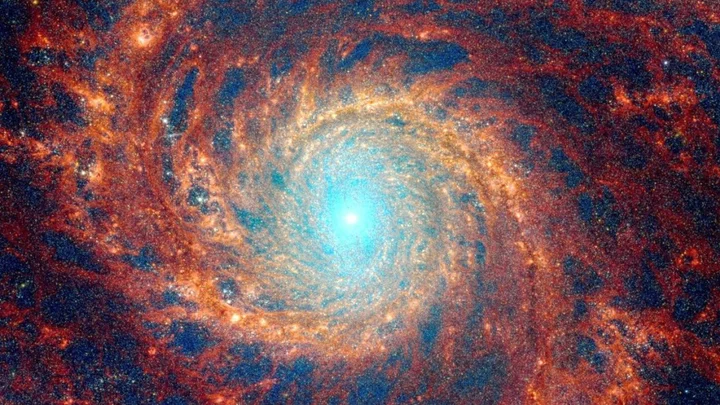
Scientists discover fluffy 'alien' planet where it rains sand
Experts have discovered a fluffy “alien” planet where it rains sand in stunning new observations from the James Webb Space Telescope. The bizarre-looking planet is officially known as exoplanet WASP-107b and has a cloud of silicate sand that exists high within its atmosphere giving it its strange fluffy appearance. NASA’s James Webb Space Telescope (JWST) has been responsible for some astounding findings since it was launched in 2021, including a mysterious galaxy shaped like a question mark. Now, observations made by the telescope have been used by experts who have been able to determine the atmospheric composition of the exoplanet that was pictured. A team of European astronomers found that water vapour, sulfur dioxide and silicate sand clouds existed in the exoplanet’s diverse atmosphere. The exoplanet WASP-107b is one of the lowest-density planets that astronomers are aware of. To put it into context, it is the same size as Jupiter, but has just 12 per cent of Jupiter’s mass. Thanks to its low density, it has allowed scientists to take a deeper look into the planet’s atmosphere, exploring 50 times deeper than would be possible with denser planets. The discovery of sulfur dioxide was a surprise because the host star it orbits only emits a small amount of high-energy light photons. But, its low-density atmosphere allows the photons to penetrate WASP-107b’s atmosphere where the chemical reaction that creates sulfur dioxide can occur. They also discovered that it essentially rains sand on the exoplanet due to the presence of clouds high in the atmosphere made up of fine silicate particles. Experts believe the clouds of sand form in the same way as rain does on Earth as the droplets continually fall and condense back into cloud form. The lead author of the study, Leen Decin from Katholieke Universiteit Leuven in Belgium, explained: “JWST is revolutionizing exoplanet characterisation, providing unprecedented insights at remarkable speed.” She added: “The discovery of clouds of sand, water, and sulfur dioxide on this fluffy exoplanet… is a pivotal milestone. It reshapes our understanding of planetary formation and evolution, shedding new light on our own solar system.” How to join the indy100's free WhatsApp channel Sign up to our free indy100 weekly newsletter Have your say in our news democracy. Click the upvote icon at the top of the page to help raise this article through the indy100 rankings.
2023-11-20 18:17

Binance ordered to stop all digital currency services in Belgium
By Sudip Kar-Gupta BRUSSELS Belgium's FSMA regulator on Friday ordered Binance to cease offering any virtual currency services
2023-06-24 01:51
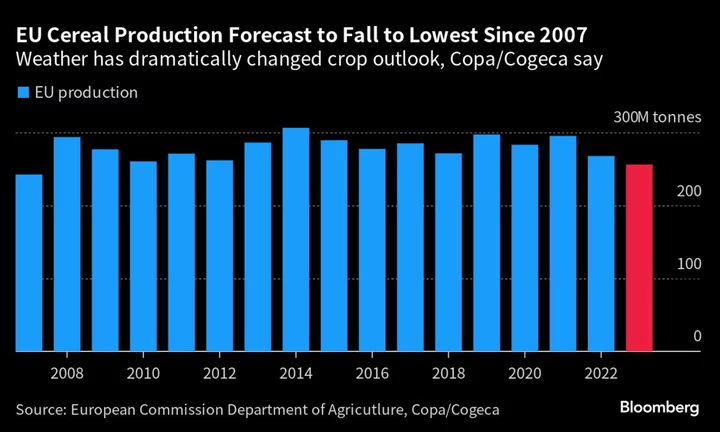
Heat, War and Export Bans: Global Food Threats Are On the Rise
As scorching temperatures ravage farms from the US to China, crop harvests, fruit production and dairy output are
2023-07-22 15:46
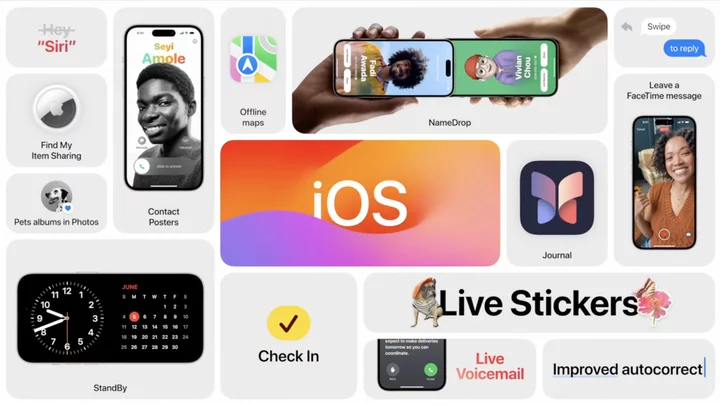
WWDC 2023: iOS 17 updates core features and adds a new Journal app
Apple has officially unveiled iOS 17. At WWDC 2023, the company's developers conference, Apple introduced
2023-06-06 04:23

COLOPL Group Blockchain Game Company Brilliantcrypto, Announces Partnership with 7 Guild/DAO Organizations Globally
TOKYO--(BUSINESS WIRE)--Jul 21, 2023--
2023-07-21 14:17
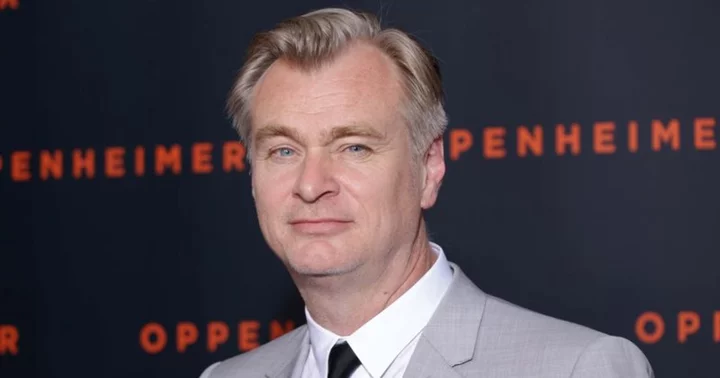
Why does Christopher Nolan not use a smartphone? Influential filmmaker finds it useless and a distraction
Christopher Nolan said, 'If I’m generating my material and writing my own scripts, being on a smartphone all day wouldn’t be very useful for me'
2023-07-16 01:18
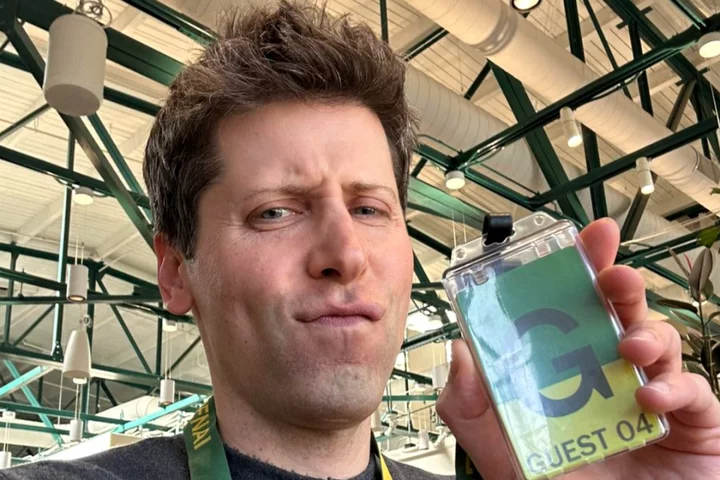
Microsoft hires ousted OpenAI boss Sam Altman
Microsoft has hired OpenAI co-founder and former chief executive Sam Altman just days after he was ousted from his company. Mr Altman was fired on Friday, less than a year after launching the hugely successful AI chatbot ChatGPT, with OpenAI’s board saying it “no longer has confidence in his ability to continue leading OpenAI”. Microsoft CEO Satya Nadella was reportedly “furious” about being blindsided by Mr Altman’s firing, despite the tech giant being a key investor of the artificial intelligence firm. On Monday, Mr Nadella announced that both Mr Altman and fellow OpenAI co-founder Greg Brockman would be joining his company. “We’re extremely excited to share the news that Sam Altman and Greg Brockman, together with colleagues, will be joining Microsoft to lead a new advanced AI research team,” Mr Nadella wrote on X, formerly Twitter. “We look forward to moving quickly to provide them with the resources needed for their success.” Mr Altman replied to the post: “The mission continues.” Mr Altman had previously posted a picture of himself wearing an OpenAI guest pass over the weekend, together with the caption: “First and last time I ever wear one of these.” Mr Nadella followed up his original post on X with further details about what Mr Altman’s new role might be within the company. “I’m super excited to have you join as CEO of this new group, Sam, setting a new pace for innovation,” he wrote. “We’ve learned a lot over the years about how to give founders and innovators space to build independent identities and cultures within Microsoft, including GitHub, Mojang Studios, and LinkedIn, and I’m looking forward to having you do the same.” Read More OpenAI in talks to bring Sam Altman back days after CEO ouster, reports say OpenAI co-founder Sam Altman ousted as CEO ChatGPT Plus stops signups after major update ChatGPT creator mocks Elon Musk in brutal tweet ChatGPT goes offline ChatGPT update allows anyone to make their own personalised AI assistant
2023-11-20 17:19

ExoHydraX: Controversial Twitch streamer reveals why she was permabanned
Before this permaban, ExoHydraX was already temporarily banned from Twitch due to broadcasting sexually suggestive content
2023-05-20 15:22

This Smart Go-Kart Lets Kids Speed While Parents Stay in Control
The Arrow Smart-Kart is a high tech go-kart designed to satisfy every kid's need for speed—and every parent's desire for safety.
2023-09-10 22:54
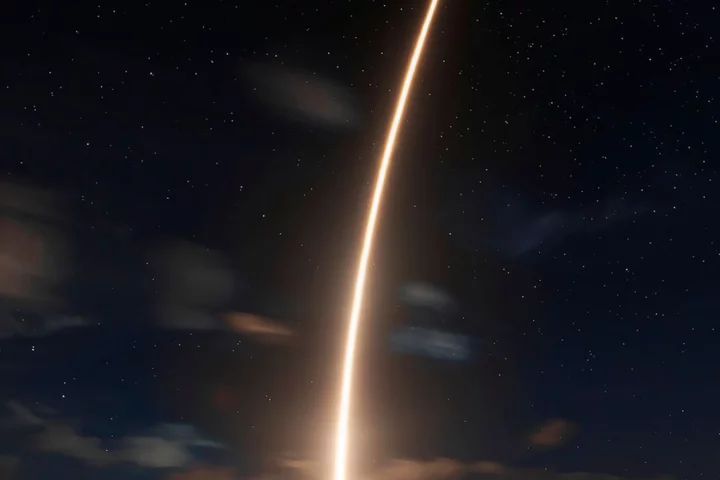
Someone could soon be killed or injured by falling satellites every two years, US official report warns
Someone could soon be at risk of dying or being injured by a falling satellite every other year, according to a new report. By 2035, if SpaceX’s Starlink space internet satellites continue to grow in number, then they some 28,000 pieces of them will be falling from the sky each year, according to a report from the Federal Aviation Authority. The chance of one surviving its fall to the ground and injuring or killing someone would be 0.6 per year, it said – which would make it likely to happen once every two years. They could even pose a risk to aircraft, it said. The probability of an aircraft being downed by a satellite would be 0.0007 per year by 2035, the report claimed. The report was commissioned amid increasing concern about falling space debris, and the vast collection of material that has been put into space in recent years. Companies such as SpaceX are launching more and more satellites each years, and experts have warned that there is a danger of collisions both in space as well as on the ground. The new report aimed to evaluate the risk posed by that falling space debris. It also suggests that some of the danger could be limited with more regulation. But it notes that the FAA does not have any power over launches that happen outside of the US. As with many of the problems in space, the world currently lacks an international approach to space debris, new satellites and the dangers that those objects might pose. The report primarily looked at the constellation of satellites that have been launched and are planned by SpaceX, for instance. The company has launched 5,000 such satellites already, and plans to increase that dramatically, and SpaceX represents over 85 per cent of the risk posed to people on the ground, the FAA’s report said. But it did not look at other networks of satellites planned in other countries. Recent reports have suggested that China is planning its own huge constellation of satellites that will also offer their own space internet, named Guowang, for example. SpaceX has said that the analysis used to calculate the number is “deeply flawed” and based on false assumptions about the danger posed by its satellites. The company’s satellites are more likely to burn up on entry than the report assumed, the company’s principal engineer David Goldstein wrote in a letter to the FAA, according to a report from Space News. Read More PlayStation announces brand new version of the PS5 ChatGPT founder says bitcoin is ‘super logical’ next step for tech Google to trial AI in UK traffic light systems to reduce stop-and-go emissions
2023-10-11 00:58
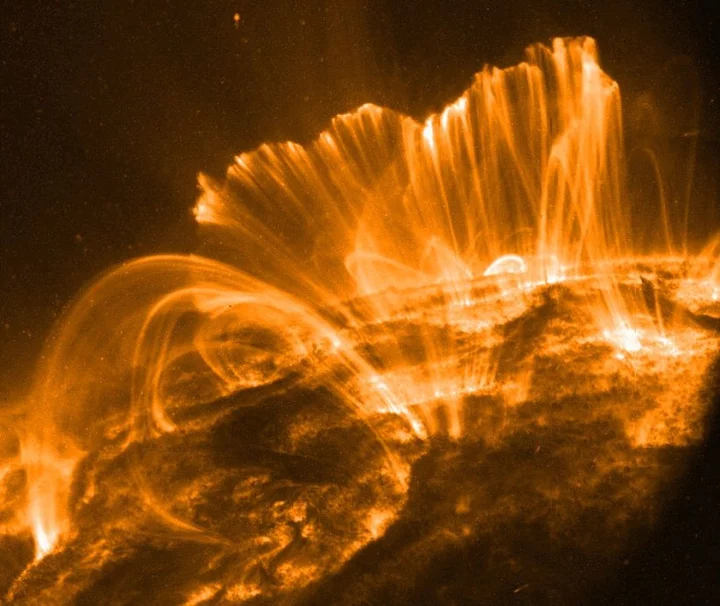
Nasa’s new AI gives ‘30 minutes of advance warning’ before killer solar superstorms strike Earth
Nasa has built an artificial intelligence model to predict where on Earth an impending solar storm would strike, a new system that scientists said can provide “30 minutes of advance warning”. The AI model analyses Nasa satellite data to raise the alarm on dangerous space weather, said researchers from the American space agency’s Goddard Space Center. The warning may provide just enough time for countries to prevent severe impacts of these storms on power grids and other critical infrastructure, according to the new study published recently in the journal Space Weather. Solar storms are caused when the Sun emits a burst of electrically charged plasma in what is called a coronal mass ejection. These charged particles create so-called geomagnetic storms that may cause blackouts and technological malfunctions of instruments on Earth as they interfere with the protective magnetic field around the planet. While these storms range from mild to extreme, their effects could become increasingly disruptive in a technologically dependent world. For instance, a solar storm in 1989 caused blackouts across Quebec, Canada for 12 hours, plunging millions into the dark and closing schools and businesses. Another popular solar superstorm event known as the Carrington Event sparked fires at early telegraph stations in 1859 that prevented messages from being sent. Scientists warned that the risk of such a devastating solar storm is increasing as we approach the next “solar maximum” – a peak in the Sun’s 11-year activity cycle. To prevent such a devastation, Nasa scientists developed the new AI model to identify links between solar wind measurements from previous Sun missions and geomagnetic disturbances observed at ground stations across Earth. The computer model they developed, called DAGGER, can quickly and accurately predict geomagnetic disturbances worldwide, “30 minutes before they occur,” researchers said. When they tested the model against two geomagnetic storms that happened in August 2011 and March 2015, it was able to “quickly and accurately” forecast the storm’s impacts around the world. The new prediction system is the first to combine swift analysis of AI, with real measurements from space and across Earth to generate frequently updated predictions. Scientists believe the early warning provided by the system can help take action to protect infrastructure from an impending solar storm, such as temporarily taking sensitive systems offline or moving satellites to different orbits. Read More Stunning aurora lights up skies over Australia: ‘Brightest one I’ve ever seen’ How a severe solar storm could leave a lasting impact on our world The world is not yet ready to overcome a once-in-a-century solar superstorm, warn scientists Astronomers find ‘objects that no one has ever seen before’ Saturn’s rings are no more than 400 million years old – study Strange sounds recorded by balloons in stratosphere leave scientists puzzled
2023-05-15 13:21
You Might Like...

Binance plans to swap 750 million of token pairs to ensure liquidity

Casino giant Caesars Entertainment reports cyberattack; MGM Resorts says some systems still down

'Fallout 3' and 'Oblivion' remasters show up in leaked Microsoft documents
FC 24 Champions Rewards Changes: Red Player Picks Removed

Save 88% on lifetime access to unlimited premium web hosting

15 South Korean Startups to Watch at TechCrunch Disrupt 2023
As Reddit Crushes Protests, Its User Traffic Returns To Normal
Credit Suisse Managing Director Says Bank Actively Seeking ESG Debt Deals