Nabow is a One-Stop Destination for All the Latest and Greatest in the World of Technology News and Innovations.
⎯ 《 Nabow • Com 》
Hackers crack Tesla software to get free features
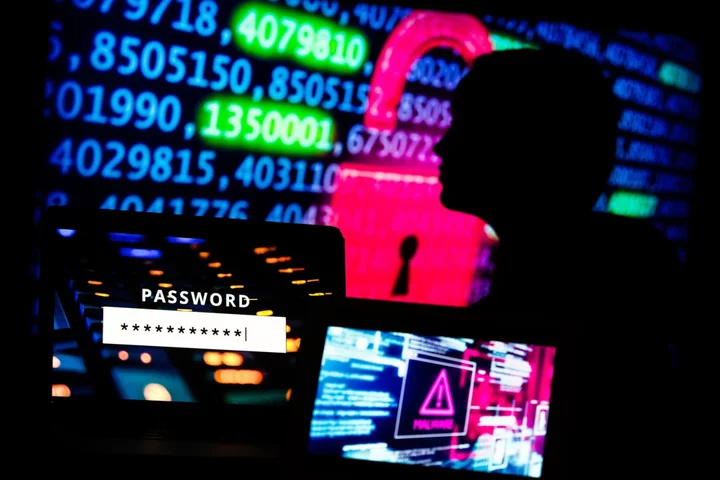
Hackers claim to have figured out how to unlock self-driving updates and other premium features on Tesla vehicles without paying for them. The group of researchers from TU Berlin who discovered the “jailbreak” claim that it is unpatchable, meaning the electric car maker will not be able to prevent people from exploiting the hack without replacing the actual hardware of the vehicles. “Tesla has been known for their advanced and well-integrated car computers, from serving mundane entertainment purposes to fully autonomous driving capabilities,” the researchers wrote in a briefing that detailed their discovery. “More recently, Tesla has started using this well-established platform to enable in-car purchases, not only for additional connectivity features but even for analogue features like faster acceleration of rear heated seats. “As a result, hacking the embedded car computer could allow users to unlock these features without paying.” The cyber attack targets Tesla’s Media Control Unit (MCU) infotainment system found on all recent models, using a technique known as voltage glitching to take advantage of a known flaw with the AMD processor in the MCU. The attack exposes personal information, such as contacts and appointments, however it requires physical access to the car in order to work. Premium features that Tesla blocks behind a paywall include Acceleration Boost, costing $2,000, and Full Self-Driving, which costs $15,000. Not all software upgrades were tested by the researchers, and it is not clear if the hack would unblock all of them. The exploit will be presented at the Black Hat cyber security conference in Las Vegas on Wednesday, 9 August, in a presentation titled ‘Jailbreaking an electric vehicle in 2023 or what it means to hotwire Tesla’s x86-based seat heater’. Tesla did not respond to a request for comment from The Independent. Read More Hacker reveals secret ‘Elon Mode’ in Tesla cars for full self-driving
2023-08-08 02:17
Age of Learning Curriculum Board Member Dr. Rebecca Palacios Honored by National Board for Professional Teaching Standards with James A. Kelly Award
LOS ANGELES--(BUSINESS WIRE)--Aug 31, 2023--
2023-08-31 20:46
World's Largest Solar Manufacturer Is Fueling a Price War
The world’s largest solar manufacturer slashed prices for a key component as growing capacity in the sector intensifies
2023-05-30 10:53
Jake Paul gambling advert banned by watchdog as YouTuber has 'strong appeal to under-18s'
Jake Paul is arguably one of the most well-known influencers in the world right now, but unfortunately for gambling firm Ladbrokes, the YouTuber-turned-boxer’s widespread appeal has landed them in a bit of trouble with the UK’s Advertising Standards Authority (ASA). The independent advertising watchdog, which regulates the advertising industry, enforces rules drawn up by the Committee of Advertising Practice (CAP), which has some pretty strict rules when it comes to gambling ads. In addition to requiring said adverts to be “socially responsible” and “protect children … from being harmed or exploited”, the CAP’s code states marketing communications must not be “likely to be of strong appeal to children or young persons, especially by reflecting or being associated with youth culture”. “They must not include a person or character whose example is likely to be followed by those aged under 18 years or who has a strong appeal to those aged under 18,” it reads. After Ladbrokes shared a promoted tweet in February featuring Paul – following his defeat to Tommy Fury – in which Twitter users were encouraged to vote on “what’s next for Jake Paul”, a single complaint was made to the ASA as to whether it may be in breach of the Code. Responding to the ASA’s enquiries, the betting company noted the advert contained no calls to action, promotions or links back to its website – and was “age-gated” so only users who had confirmed their age as being over 18 could see it. Sign up to our free Indy100 weekly newsletter The ad was specifically targeted at users aged 25 and over, receiving close to 16,500 impressions with just over 47 per cent of these being from individuals aged between 20 and 29 years. Ladbrokes also cited demographics for Paul’s following across several social media platforms, showing that the percentage of users aged between 13 and 17 years old was below 20 per cent on Instagram, YouTube and TikTok. On Twitter, zero per cent of his followers were reportedly registered as being under 18. The company also directed ASA to the watchdog’s own guidance on “protecting under-18s” from advertising about gambling and lotteries, in which it states “sports like … boxing … are more adult-oriented and unlikely to be of inherent ‘strong’ appeal” to children and young people. Zing. However, in a decision which saw the regulator uphold the complaint against Ladbrokes, the ASA ruled there was still a responsibility to comply with the rule about not appealing to under-18s because the advert “appeared in a medium where under-18s could not be entirely excluded from the audience”. It continued: “CAP guidance stated that sportspeople involved in clearly adult-oriented sports who were ‘notable’ stars with significant social media and general profiles which made them well-known to under-18s were considered moderate risk in terms of how likely they were to be of strong appeal to under-18s. “We also considered that Jake Paul would primarily be known for making YouTube videos and that he had a large social media following. We acknowledged that he had within the last few years turned to boxing. “However, because of his career on YouTube, we considered that he had a high profile within the sport and was well known outside of the sport and social media.” Although they noted Paul had no followers aged under 18 on Twitter, where the ad was located, the ASA concluded the content creator was still of “inherent strong appeal” to under-18s because “such large numbers” of his followers were in that demographic. They also mentioned Paul’s appearance on the Disney Channel series Bizaardvark between 2016 and 2018 about two teenagers, with the target audience for the show likely to be “around the same age”. As such, they found Paul still had a “strong appeal” to under-18s and that Ladbroke’s advert was “irresponsible”. Not the first time Paul and “irresponsible” have appeared in the same sentence, to be honest… Have your say in our news democracy. Click the upvote icon at the top of the page to help raise this article through the indy100 rankings.
2023-07-05 07:24
China Set to Release Long-Awaited Methane Plan Before COP28
The Chinese government is preparing to publish a roadmap to cut emissions of methane, a powerful greenhouse gas,
2023-10-25 21:24
This near-mint condition iPad Mini 2 is on sale for under $90
TL;DR: As of June 22, get this refurbished iPad Mini 2 for just $87.99 —
2023-06-22 17:51
Amazon's Echo Show 15 is a smart hub for connected homes
It’s time for me to come clean. While I’m fully on board with smart devices
2023-07-12 23:47
How to Pre-Order NBA 2K24 Arcade Edition
To pre-order the NBA 2K24 Arcade Edition before its release on Oct. 24, fans must register for Apple Arcade and hit "Notify Me" on the game's page.
2023-10-04 03:29
Special Olympics Celebrates Third Annual Gaming for Inclusion Initiative
The Special Olympics partnered with Microsoft for the third annual Gaming for Inclusion event featuring notable celebrities such as Xavier Woods, Jamaal Charles and more.
2023-11-23 00:49
Intelsat Invests in Lower Orbits as Musk’s SpaceX Upends Sector
Intelsat SA, the world’s biggest geostationary satellite operator, is making a series of bets on companies that focus
2023-09-11 14:29
From self-proclaimed ‘socialist’ to Team Trump and DeSantis: Elon Musk’s curious politics revealed
“I prefer to stay out of politics." Those were Elon Musk’s words when forced in September 2021 to respond to a claim by Texas governor Greg Abbott that he supported the state’s anti-abortion laws. If he really does prefer to stay out of politics, however, Musk has a funny way of showing it. Over his many years of fame as the chief executive of Tesla, SpaceX, and now Twitter, the South African-born tycoon has attacked everyone and everything from Donald Trump and Bernie Sanders through individual regulatory officials to Covid rules, trade unions, and "pronouns". Since 2022, his public political stances have taken a sharp rightward turn as he declared his support for the Republican Party, aligned himself with far-right activists on Twitter, disparaged transgender rights, embraced conservative conspiracy theories, and pledged to save civilisation from the “woke mind virus”. His activities appear to have earned him the patronage of Florida’s GOP governor Ron DeSantis, who was announcing that he is running for president during a conversation with Musk in Twitter’s audio panel service Spaces on Wednesday 24 May. It is a striking departure from the 51-year-old’s aproach to politics before the Covid pandemic, when he carefully triangulated between left and right and donated to both Democrats and Republicans while variously declaring himself a “moderate”, a “socialist”, and “socially liberal and fiscally conservative”. Yet despite evidence to the contrary, Musk still claims to be an independent who is “neither conventionally right nor left” and committed to healthy debate. So what does Elon Musk really believe? And – given that he is both one of the world’s richest people and the owner of one of its largest social networks – what does that mean for the rest of us? Embracing the Republican Party Let’s start with Musk’s recent support for the US Republican Party, which has been clear and unambiguous, if not without caveats. “In the past I voted Democrat, because they were (mostly) the kindness party. But they have become the party of division and hate, so I can no longer support them and will vote Republican,” he said in May. This came after months of criticism of President Joe Biden, which included hammering his flagship infrastructure and social spending bills for granting subsidies to the electric car industry and increasing the “insane” federal budget deficit. Musk later called the president a “damp sock puppet in human form”. In June 2022, Musk went further, revealing he had voted for Republican congressional candidate Maya Flores in a special election – the first time, he claimed, that he had ever cast a vote for the GOP. “Massive red wave in 2022,” Musk tweeted, though it was unclear if he meant this as a prediction or a rallying cry. Florida governor Ron DeSantis joked about the South African-born billionaire’s comments: “I’m focused on 2022, but with Elon Musk, what I would say is I welcome support from African Americans. What can I say?” Despite all this, Musk has stopped short of declaring his permanent support for the party as a whole. Following his tweet about the special election, one Twitter user asked: “I assume Republican for president [too]?” “[To be determined],” Musk replied. “What are you leaning towards?” he was asked in a follow-up question. “DeSantis,” he said. Similarly, the mogul’s endorsement of the Republican Party on the day before the US midterms in November 2022 was somewhat qualified. “To independent-minded voters: Shared power curbs the worst excesses of both parties,” he told his his 115 million Twitter followers. “Therefore I recommend voting for a Republican Congress, given that the presidency is Democratic. Hardcore Democrats or Republicans never vote for the other side, so independent voters are the ones who actually decide who’s in charge!” After the election, Musk added: “To be clear, my historical party affiliation has been Independent, with an actual voting history of entirely Democrat until this year. And I’m open to the idea of voting Democrat again in the future.” A self-proclaimed ‘centrist’ who donates to both paties Musk’s caveats about supporting the GOP echo his longstanding claim to be a “centrist” or an “independent” who does not fit into traditional boxes of left or right. For years, he has offered varying definitions of his own politics. His most consistent theme has been that he is “socially liberal and fiscally conservative”, or even “socially very liberal”. In 2020, he put it this way: “I’m socially very liberal. And then economically right of center, maybe, or center. I don’t know. I’m obviously not a communist.” In 2018, he described himself as “a utopian anarchist of the kind best described by Iain Banks”, referring to the late Scottish sci-fi author who wrote longingly (if sceptically) of a space-faring anarcho-socialist civilisation called the Culture, which has no money, no poverty, no wage labour, no police, no prisons, no standing army, and nearly infinite abundance of basic goods. At another point Musk claimed to be a “socialist”, but “not the kind that shifts resources from most productive to least productive”. He later said we should not take what he’d said too seriously. In April 2021, he posted a stick figure cartoon on Twitter that depicted political moderates, including himself, standing still on the political spectrum while the left accelerates away into extremism, dragging the centre ground away and making moderates appear right-wing by comparison. The following November, he professed himself “neither conventionally right nor left”, and in December remarked: "You know Twitter is being fair when extremists on far right and far left are simultaneously upset!" Musk’s political donations offer some support for this. According to data gathered by the non-profit lobbying watchdog Open Secrets, Elon Musk has given a total of $1.2m to politicians, parties, political action committees (PACs), and referendum campaigns since 2002. That money went almost equally to Democrats, with $542,000, and Republicans, with $574,500, with another $85,000 going to two broadly left-wing referendum campaigns in California. The balance has fluctuated over the years: in 2006, 2013 and 2017 he donated overwhelmingly to Republicans, while in 2015 he gave exclusively to Democrats. He has also given a total of $30,000 to a PAC set up by SpaceX, which donated 54 per cent of its total to Democrats and 46 per cent to Republicans. Many of the individual politicians he gave to were state legislators in California, where Tesla was formerly based, and Texas, where SpaceX has long maintained rocket testing and launch facilities. Musk donated to more individual Democratic politicians than to Republicans, and often praised specific Democrats in a way he has rarely done with their opponents. Way back in 2005, he gave $10,000 to California’s Proposition 82, a proposal to increase taxes on the rich to pay for universal pre-school for four-year-olds, although it did not pass. When Donald Trump was a candidate for the Republican nomination, Musk said of him: “I feel a bit stronger that he is probably not the right guy. He doesn’t seem to have the sort of character that reflects well on the United States.” Musk says he voted for Joe Biden in 2020. Meanwhile, SpaceX itself has spent about $9.7m on lobbyists and Tesla has spent $5.5m. The former company relies on government contracts for much of its revenue, while the latter is subject to plenty of regulation. "SpaceX's campaign to win political support has been systematic and sophisticated," wrote the Sunlight Foundation in 2013. Musk has described these donations not as a signal of his own personal beliefs but simply as the cost of doing business in America. "In order to have your voice be heard in Washington, you have to make some little contribution," he told the Huffington Post in 2013. All of which helps explain why the first version of this article – back in December 2021 – framed Musk’s political beliefs as elusive and somewhat puzzling. Since then, however, Musk’s own behaviour has made that idea rather outdated. Elon Musk, culture warrior There’s no avoiding the obvious: Musk appears to have been thoroughly red-pilled. Originally drawn from the 1999 sci-fi film The Matrix, the “the red pill” is a phrase used by white supremacists and anti-feminists to describe the process of being radicalised into their worldview. Musk himself urged his Twitter followers to “take the red pill” in April 2020. It is a neat expression of how far down the culture war “rabbit hole” Musk has burrowed since then. He has described “wokeness” as a “mind virus” that poses a “mortal threat to civilisation”, declaring: “The woke mind virus is either defeated or nothing else matters.” In a June 2022 interview with The Babylon Bee, a conservative satire site, he said: "At its heart, wokeness is divisive, exclusionary and hateful. It basically gives mean people... a shield to be mean and cruel, armored in false virtue." In a similar vein, he mocked Twitter’s adoption in 2016 of “Stay Woke” T-shirts inspired by the 2014 Ferguson protests against police racism, claiming that the protesters’ “Hands up, don’t shoot” slogan was “made up” and that “the whole thing was a fiction”. The US Justice Department did indeed clear the officer who shot Michael Brown, but also concluded that Ferguson police had “routinely” violated citizens’ constitutional rights and discriminated against Black people. Texas governor Greg Abbott, to whom Musk donated $10,000 in 2014, has claimed that Musk “likes the social policies” of his state, which include banning almost all abortion and defining transgender healthcare for under-18s as “child abuse”. Musk rebuffed him, but ambiguously and mildly, with nothing like the fire and brimstone he has mustered against trade unions or tax proposals. Musk has also boosted right-wing conspiracy theories, claiming that health tsar Anthony Fauci should be prosecuted and sharing a groundless claim about the attack on Nancy Pelosi’s husband from a website with a history of fake news. As a homophobic hate campaign began to gather steam against one of his former employees, Yoel Roth, Musk weighed in to groundlessly imply that Roth was an enabler of child abuse. Roth subsequently suffered a torrent of abuse and threats that reportedly forced him to leave his home. That incident echoed the US right’s growing penchant for smearing political opponents, and particularly LGBT+ people, as paedophiles or “groomers”. According to the left-wing think tank Media Matters, some members of the quasi-fascist QAnon movement – which helped popularise child abuse smears as a political tactic – are convinced that Musk is one of them, albeit based on shaky evidence. On Twitter, Musk regularly interacts on friendly terms with far-right activists who traffic in hoax claims about the 2020 US election and hate speech about minority groups, sometimes soliciting their advice about how to run the site or chiming in to agree with their tweets. Perhaps this could be explained as a commitment to maintaining open discussion across political divides – except it’s hard to name any left-wingers with whom he is so pally. Musk has shown a particular antipathy to Covid lockdowns, which he once described as "fascist". He declared early in the pandemic that "the coronavirus panic is dumb" and wrongly predicted that the virus would be gone from America by the end of April 2020. He has also consistently singled out transgender people in his critiques of “wokeness”. While he has claimed to “absolutely support” trans people, he scorns the idea that anyone should be expected to use the correct pronouns when referring to them, which most trans people view as a basic act of respect that is necessary for their equal participation in society. “Forcing your pronouns upon others when they didn’t ask, and implicitly ostracising those who don’t, is neither good nor kind to anyone,” Musk said in December 2022. He has previously declared that “pronouns suck” and tweeted a meme likening cisgender people who state their pronouns on their Twitter profiles to oppressive Redcoats in colonial America. Before buying Twitter, he railed against the social network’s rules on anti-trans hate speech, which forbid users from intentionally referring to specific trans people by their birth sex (known as misgendering) or by old names they have renounced (known as deadnaming). As chief executive, Musk has reportedly made reviewing that policy a top priority. And, just after Christmas 2022, Musk liked a tweet by Libs of TikTok, a conservative Twitter account that has been accused of encouraging violence and harassment against LGBT+ people, that appeared to characterise educating children about LGBT+ issues as “confusing kids about their identity” and “stealing childhood innocence” while describing transition healthcare as “sterilising and mutilating kids”. Critics have suggested that this rhetoric may be related to Musk’s estrangement from his trans daughter, who has legally renounced his surname and said that she does not want to be related to him “in any way, shape or form.” Musk has blamed “neo-Marxists” at her university for turning her against him. Others have raised eyebrows at the fact that Musk’s former girlfriend, the electronic musician Grimes, is now in a relationship with a trans woman. All in all, it’s hard to reconcile Musk’s actions in 2022 with his claims of centrism. Nor does his alliance with pro-Trump outrage merchants say much for his once-vaunted “social liberalism”, which previously led him to favour “direct democracy” over representative democracy and advocate for the release of people imprisoned for cannabis offences. Pro-capitalist and anti-union Social policies notwithstanding, Musk remains an ardent free-marketeer who is deeply skeptical of government interventions in business. That was the basis of his attack on President Biden's Build Back Better Act in December 2021, saying the bill's tax rebate of up to $12,500 for people who buy electric cars is an "unnecessary" handout for an industry that is already taking off. He backed that up with a revealing philosophical argument about the difference between corporations and nation states. "It does not make sense to take the job of capital allocation away from people who have demonstrated great skill in capital allocation," he said, meaning business leaders, "and give it to an entity that has demonstrated very poor skill in capital allocation, which is the government. Government is simply the biggest corporation, with a monopoly on violence – and where you have no recourse. So how much money do you want to give that entity?" This libertarian-style thinking is fairly consistent for Musk. He has strongly opposed trade unions, especially in his own companies, as a barrier to efficient operations, and skirmished repeatedly with Bernie Sanders over the Vermont senator’s proposals for an income tax on billionaires. He claimed in October that Biden "seems to be controlled by unions" and in 2018 tweeted that Tesla employees who attempted to unionise would lose their stock options, which regulators have claimed was illegal. When he does endorse government intervention, Musk tends to favour measures that minimise government bureaucracy. Rather than subsidies for green industries, for example, he wants a carbon tax, and says he lobbied the Biden administration to create one. His argument is that the price of fossil fuels doesn't properly reflect their cost to the environment, meaning companies are basing their decisions on false information. Taxing carbon would correct that balance, allowing the free market to figure out in its own way how best to cut their emissions. That said, none of this stopped him from accepting billions of dollars in government subsidies for both Tesla and SpaceX. Similarly, Musk has long argued for a universal basic income to support human workers whose jobs, he believes, will soon be replaced with artificial intelligence (AI). In some ways that's a pretty left-wing idea, since it would involve spending enormous amounts of taxpayer money. But it has also been favoured by some conservatives such as Richard Nixon and free market economists such as Milton Friedman, both of whom felt it would prevent government bureaucrats deciding who deserves benefits and avoid punishing recipients for finding work. Green power has often been Musk's red line Another point of consistency has been global warming and clean energy. Back in 2006, Musk gave one of his biggest ever single donations – $75,000 – to Proposition 87, a California referendum campaign to impose a special tax on fossil fuel extractors. Since then, emissions have often been his red line. In the early years of Donald Trump's presidency, Musk joined a White House advisory council, saying that "the more voices of reason that the president hears, the better". But when Trump withdrew the US from the Paris Climate Agreement, Musk quit, saying: "Climate change is real. Leaving Paris is not good for America or the world." And when Musk was persuaded to get into Bitcoin – a natural fit, given his libertarian outlook and his penchant for technological solutions for political problems, to say nothing of his fondness for controversy – it was the currency's prodigious carbon emissions that led him to rethink. "Tesla has suspended vehicle purchases using Bitcoin," he said in May 2021. "We are concerned about rapidly increasing use of fossil fuels for Bitcoin mining and transactions, especially coal, which has the worst emissions of any fuel. Cryptocurrency is a good idea on many levels and we believe it has a promising future, but this cannot come at a great cost to the environment." Where Musk has supported Biden, that too is connected to the environment. Just after the president’s inauguration, he told Fortune: "I'm super fired up that the new administration is focused on climate... I feel very optimistic about the future of sustainable energy with the new administration." Even in his culture warrior era, Musk has stuck to this particular gun. When conservative activist Tom Fitton claimed in December 2022 that electric cars have “no impact on climate”, Musk responded, curtly: “Yeah they do.” A technocrat with astral ambitions Through all these issues runs one strain of Musk's politics that genuinely does not map onto the traditional political compass: technocracy. Back in the 1930s and ’40s, Musk’s grandfather Joshua Haldeman was the Canadian leader of the original technocratic movement, which believed in replacing both politicians and bankers with whoever had the most expertise. Elon Musk, capitalist extraordinaire, does not exactly take after his grandfather. Like the movement’s founder William Henry Smyth, though, his statements suggest a strong underlying belief that scientists and engineers can solve political problems that are intractable to others. As the historian Jill Lepore has argued, Musk inspires numerous followers with an exotic brand of techno-capitalism that she calls "Muskism". She says that many of its ideas are drawn from science fiction, sometimes very old science fiction, meaning that alongside rockets and cars it is also selling "visions of the future". Musk thinks we may live in a simulation; he regularly references Scottish sci-fi author Iain M Banks; and he is especially preoccupied with the dangers of AI, which he calls "the most serious threat to the survival of the human race". He is worried not only about mass automation of white-collar jobs but also the rise of a theoretical hyper-intelligent AI that is too powerful for humans to restrain. "With artificial intelligence we are summoning the demon," he said in 2014. "In all those stories where there’s the guy with the pentagram and the holy water, it’s like – yeah, he’s sure he can control the demon. Doesn’t work out." Both that and global warming feed into Musk's conviction that colonising other planets – becoming "a multi-planet species" – is crucial to humanity's long-term survival. However seriously you take that, it is clearly an important goal that shapes the rest of his politics. Even his diatribes against the “woke mind virus” – as well as his hostile takevoer of Twitter – are based on the idea that “wokeness” and divisive social networks are a threat to human civilisation. It is a characteristically cosmic rationale for tweeting incessantly about pronouns. Two things are notable here. One is that many of these issues are not very well-known outside the tech industry, and to prioritise them suggests that you believe everyone else is missing a trick. The other is that Musk is not attempting to meet the dangerous future through government action or massive collective institutions like formal movements or trade unions. Instead, he wants to solve it himself, through hierarchical top-down for-profit companies run by him where he decides how to allocate capital. In other words, he is his own kind of technocrat: a talented engineer and huge nerd who thinks engineers and nerds can design better systems of government and economics than currently exist. For evidence, look at Musk’s troubled Hyperloop project, which is trying to build a new form of public transport while eschewing any input from traditional transit experts, who say that he has essentially invented very inefficient buses. (It is also among the beneficiaries of Biden’s infrastructure bill.) WhenTIME magazine named Musk its 2021 Person of the Year, it described him this way: “The man from the future where technology makes all things possible is a throwback to our glorious industrial past.” But many of the people who actually lived in that past reviled its industrialists as “robber barons”, and their misdeeds inspired regulations and social policies that are still in place today. That is why Professor Lepore describes Muskism as containing "a lot of feudalism", saying: "It’s like there are these lords and the rest of us are the peasantry and our fates are in their hands because they know best... The presumption that Jeff Bezos and Elon Musk, [two of the] wealthiest people in the world, get to decide the extraterrestrial fate of humankind is a bizarrely regressive notion." Musk has his own bullish answer to such claims. "To anyone I’ve offended, I just want to say: I reinvented electric cars and I’m sending people to Mars in a rocket ship," he said on Saturday Night Live in May 2021. "Did you think I was also going to be a chill, normal dude?" This article was originally published on 9 December 2021, and has been regularly updated since then. Read More Elon Musk wants to proceed with $44bn Twitter buyout Zelensky fires back at Elon Musk’s ‘insane’ Twitter poll on Russia Ukraine peace Elon Musk Twitter deal - live: Stock market goes wild as Tesla mogul’s $44bn buyout is accepted Ivanka and Jared split over attending Trump 2024 launch – follow live Why was Donald Trump impeached twice during his first term? Four big lies Trump told during his 2024 presidential announcement
2023-05-25 06:16
Study reveals the best exercises to lower blood pressure
A study has found the best exercises to lower blood pressure, so get ready to go to the gym. Research published in the British Journal of Sports Medicine and conducted at Canterbury Christ Church and Leicester universities, compared the efficacy of different forms of exercise on reducing blood pressure and found that “isometric exercises” – which involve engaging muscles without moveme are your best bet. That means it is time to hold a wall-sit, or plank for ages. Fun times. The study examined 270 randomised controlled clinical trials, involving 15,827 participants, on the effects of different types of exercise on resting blood pressure. It even found that these isometric techniques were almost twice as effective as government recommended exercises, aerobic activity like cycling and walking, though they found these other forms of exercise were effective too. Reducing blood pressure reduces your chance of stroke, heart failure, and other issues. Sign up to our free Indy100 weekly newsletter Over-40s are advised to have it checked every five years. Treatment often involves medication but patients are also advised to eat healthily, reduce alcohol intake, stop smoking and exercise regularly. Jamie O’Driscoll, a reader in cardiovascular physiology at Canterbury Christ Church university and senior author of the report, said in isometric exercises the muscle remained contracted but did not change in length. This static contraction could squeeze the vessels that supplied blood to the working muscles – which reduced the flow of blood to the muscle during the exercise and therefore oxygen supply to the muscle. When the muscle relaxed afterwards, it caused a large flow of blood through the vessels (this was different to other modes of exercise) and was likely to be the trigger driving these greater improvements in blood flow regulation. “Performing 4 x 2 minutes of wall sits, with 2-minutes’ rest in between, three times per week, is an effective way to reduce your blood pressure,” said O’Driscoll. “They should be done alongside other exercise modes, to provide the maximum range of exercise choices rather than limiting them.” Dr Kush Joshi, a sports and exercise medicine consultant and fellow of the Faculty of Sport and Exercise Medicine, welcomed the study’s findings, but questioned how easy it would be for patients to do. “The reality is a significant proportion of the population will not be able to do a plank or wall sits, and furthermore may not enjoy these types of activities,” he said. “Solutions need to be found to make these exercises accessible to all individuals with elevated blood pressure, and the study should provide impetus to policymakers to make exercise the bedrock of treatment of not only high blood pressure but other medical conditions and so to reduce the burden of medication for the population.” Joanne Whitmore, a senior cardiac nurse at the British Heart Foundation, said it was encouraging to see the benefits of other forms of exercise, as well as aerobic exercise. “We know that those who take on exercise they enjoy tend to carry on for longer, which is key in maintaining lower blood pressure.” But she said it was important to make lifestyle changes too, such as losing weight, eating more healthily and reducing alcohol consumption. Have your say in our news democracy. Click the upvote icon at the top of the page to help raise this article through the indy100 rankings.
2023-07-26 18:53