

Robots actually slow down company’s productivity at first, study finds
The introduction of robots into businesses actually slows – at least at first, according to a new study. Researchers found that the introduction of robots bring down profit margins. But as they technology becomes better integrated, it will start to rise again, the study found. Researchers believe that U-shaped curve comes about because of reduced costs, new processes and innovative products. When companies first adopt robots with the aim of reducing costs, competitors are able to do the same, and so profit margins do not initially grow. The real profits come, however, when the robots are properly adopted and integrated into the company’s processes, and they can use that new innovation to develop new products, the researchers suggest. Those are the findings from a new study from the University of Cambridge and published in IEEE Transactions on Engineering Management. While robots are known to increase productivity when looking at a whole industry or country, it is less clear whether it helps with profit margins. The researchers set out to answer that question and see whether companies were using robots to improve processes within companies. And they were also looking to understand whether it had followed the same perhaps unexpected trajectory as when computers were first introduced into businesses. “If you look at how the introduction of computers affected productivity, you actually see a slowdown in productivity growth in the 1970s and early 1980s, before productivity starts to rise again, which it did until the financial crisis of 2008,” said co-author Professor Chander Velu from Cambridge’s Institute for Manufacturing. “It’s interesting that a tool meant to increase productivity had the opposite effect, at least at first. We wanted to know whether there is a similar pattern with robotics.” To find out, researchers gathered data for 25 European countries that showed industry-level trends between 1995 and 2017. That data did not include specific companies but did allow them to see whole sectors. They then gathered robotics data from the International Federation of Robotics (IFR). By setting the two against each other, they were able to see how the adoption of robotics changed profit margins. There they found that U-shaped curve: that the adoption of robotics drove down profits, initially, even if it came back eventually. “Initially, firms are adopting robots to create a competitive advantage by lowering costs,” said Velu. “But process innovation is cheap to copy, and competitors will also adopt robots if it helps them make their products more cheaply. This then starts to squeeze margins and reduce profit margin.” Read More Apple planning new version of AirTags – but not for some time Algorithm finds 600-foot, ‘potentially hazardous’ asteroid near Earth Reddit closes Place after obscene protests Apple planning new version of AirTags – but not for some time Algorithm finds 600-foot, ‘potentially hazardous’ asteroid near Earth Reddit closes Place after obscene protests
2023-08-04 01:48

Facebook is wrong to say news lacks economic value, says Canada PM Trudeau
By Ismail Shakil OTTAWA Canadian Prime Minister Justin Trudeau on Tuesday said Meta Platforms Inc's opposition to proposed
2023-05-10 01:17

IBT and ATLATL Join Forces to Tackle Challenges in Brain Health
BEIJING--(BUSINESS WIRE)--Sep 4, 2023--
2023-09-05 00:27

ASRock B650E Taichi Lite Review
Usually the "lite" version of a product removes features (or calories), but the ASRock B650E
2023-09-03 00:57

EU Still in Talks With Countries on Renewables Deal
The European Commission is still in talks with countries on a deal to scale up renewable energy by
2023-06-07 16:53

Stability AI Head of Research Resigns From Startup
Stability AI, the closely watched artificial intelligence startup, has lost at least two top executives in recent weeks,
2023-06-27 06:58

Activision Blizzard games won't be heading to the Xbox Games Pass before 2024
Phil Spencer says Activision titles should be on the subscription service in 2024.
2023-10-18 19:30
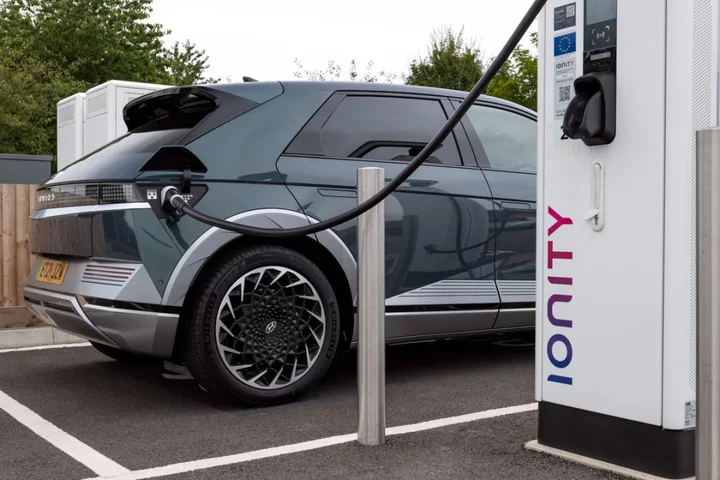
The different types of public EV chargers explained
Hyundai and Toyota have both come under fire recently by the Advertising Standards Authority (ASA) over ads detailing the two firms’ quick charging times. The ASA found that the car adverts relating to Hyundai’s Ioniq 5 and Toyota’s bZ4X were ‘misleading’, due to many variables and limitations at play, especially when it came to the availability of the quickest EV chargers. But what are the different types of public EV chargers in the UK, how long can you expect a typical EV to charge with each and what is the availability of each type of charger like? Here we explain. AC slow charging – speeds up to 6kW There are two main types of EV charger – alternative current (AC) and direct current (DC). The first is used for slower charging, with the latter adopted for quicker speeds. If you’re in no rush, what’s classed as a ‘slow charger’ is the best bet. These are rated at speeds up to 6kW, and are ideal for if a car is parked up for an extended period of time. They are typically found in on-street chargers, including those in lamp posts. Let’s use Hyundai’s Ioniq 5 as an example. When equipped with the smaller 58kWh battery (an average size for an EV’s battery), it would take 16 hours to complete a charge. ‘Slow’ units are the second most popular type of charger in the UK. According to data from Zap-Map, one of the leading EV charging navigation firms, as of the end of May 2023, there were 10,699 slow chargers across Britain. AC fast chargers – 7kW to 22kW The most popular type of charger in the UK is what’s known as a ‘fast charger’. Rated between 7kW and 22kW, the smaller number is the most common type. These are often found in places where cars are usually stopped for several hours, such as in shopping centre and workplace car parks. The 7kW output is the typical output of a specific home EV charger, and with the Ioniq 5, it would take nine hours for a full charge. If you hooked up to a quicker 22kW charger, the time is reduced to six hours. According to Zap-Map data, there are 24,443 fast charging points currently in the UK. DC Rapid charger – 25kW to 99kW If you’re looking to speed things up a notch, it’s worth trying to find what’s known as a ‘rapid charger’. These are rated between 25kW and 99kW, though 50kW is the most common output. Often found in the car parks of supermarkets and fast food outlets, it would take around 45 minutes to charge the Ioniq 5’s 58kWh battery, according to Hyundai’s data, with one of these units. . As of May 2023, there were 5,182 rapid electric car charging points located across the UK. DC Ultra-rapid charger – 100kW + If you’re looking to top up an EV’s battery as quickly as possible, it’s an ultra-rapid charger that are the one to find. These are rated from 100kW upwards. They are typically found at motorway service stations, though specific EV hubs are now being set up with banks of these quicker units. Most Porsche dealers also have 350kW units, which are available to use by the public. It’s worth noting that every EV will have a maximum charging speed, with some older electric cars – or those with a smaller battery – having a maximum charging speed of 50kW, meaning there’s not a lot of point in using an ultra-rapid charger over a standard ‘rapid’ as it won’t charge it any quicker. But the Ioniq 5 is one of those that can charge at up to 350kW, however, meaning that in ideal conditions, it could take just 18 minutes to charge the battery to 80 per cent capacity. The trouble, however, as the ASA pointed out, is that there is limited availability of 350kW units. While, according to Zap-Map data, there are 3,302 ultra-rapid chargers across the UK, there are only around 70 individual locations across the whole of the UK that have 350kW chargers. The whole of Scotland, for example, has just six places that can deliver such charging speeds, while there are only three in Wales, and all of them are located in the south. Read More Charity boss speaks out over ‘traumatic’ encounter with royal aide Ukraine war’s heaviest fight rages in east - follow live Emergency number back in use after nationwide technical fault Windrush trolls taken down after public criticism Meta rejects accusation of censorship of language around female body
2023-06-28 20:20

Netflix ends password sharing in 'big market' India
Only users from a single household will be able to use an account, the streaming giant has said.
2023-07-20 13:58

GTA 6 Trailer Coming in December
Rockstar Games confirmed the GTA 6 trailer is coming in December with the first look at Vice City and rumored female protagonist, Lucia.
2023-11-09 03:18

Leapmotor Debuts Global Product C10 and New Technologies at Munich, Launches Global Strategy
MUNICH--(BUSINESS WIRE)--Sep 5, 2023--
2023-09-06 01:51

US Supreme Court weighs if public officials can block critics on social media
By John Kruzel and Andrew Chung WASHINGTON (Reuters) -The U.S. Supreme Court on Tuesday waded into the issue of free
2023-11-01 00:50
You Might Like...

Boeing data published by Lockbit hacking gang

This Microsoft Excel training bundle is on sale for 85% off

ARC, Inc. Wins $15 Million U.S. Air Force STRATFI Contract

Crypto giant Binance's US affiliate fires staff after SEC charges -sources

As Elizabeth Holmes heads to prison for fraud, questions remain about her motives

How to Pre-Register Mortal Kombat: Onslaught
GM's Cruise plans careful re-launch for driverless robotaxis

Apple supplier Foxconn to invest $500 million in India's Telangana state