

UK opens new probe into Microsoft's purchase of Activision
(Reuters) -Britain's antitrust regulator said on Tuesday it had opened a Phase 1 probe into a newly restructured deal by
2023-08-22 14:20

Dillon Danis labels Jake Paul 'fake' for not defending brother Logan Paul and his fiance Nina Agdal, Internet says 'they’re showing their true colors'
Logan Paul and Nina Agdal just got engaged, but Danis has attacked her previous relationships and shared several indecent images of her online
2023-08-30 17:59

Save $500 on HP Spectre 2–in-1 Laptop Powered by Intel's Evo Platform
If you're in the market for a sleek and powerful 2-in-1 laptop, look no further
2023-05-26 01:19

Andrew Tate finds beautiful women saying ‘Thank you’ to inanimate objects 'super hot’, fans say they 'sound like a ABBA song'
'I have no idea why but seeing a beautiful woman say thank you to everything is super hot. Any theories why?' asked Andrew Tate
2023-07-31 17:48

Keysight Introduces First PCI Express® 6.0 Protocol Validation Tools
SANTA ROSA, Calif.--(BUSINESS WIRE)--Jun 13, 2023--
2023-06-13 23:24

Eco-Energy Terminals Become First Two Verified Net-Zero Facilities in Georgia
FRANKLIN, Tenn.--(BUSINESS WIRE)--Jul 18, 2023--
2023-07-18 21:19

Florida education commissioner skips forum on criticized Black history standards
Lawmakers, teachers, school board members and parents crowded into a South Florida church for a forum on the state's new standards for teaching Black history
2023-08-11 20:22

Indiana Brothers Receive Esports Scholarships From Manchester University
INDIANAPOLIS--(BUSINESS WIRE)--Sep 11, 2023--
2023-09-11 21:24

Experts unravel mystery of the Pokémon episode that hospitalised hundreds of kids
Pokémon’s TV series has been delighting animé lovers for more than 26 years, and yet, there’s one episode that even the most diehard of fans may well have missed. The installment, titled Dennō Senshi Porygon (which roughly translates as "Computer Warrior Porygon”) aired in Japan on December 16, 1997. And, after that single, fateful outing, it was never to grace television screens again. The reason for the ban? Reports of a strange health outbreak among children which was linked to a specific scene. The episode follows Ash Ketchum, Pikachu and their pals as they investigate a faulty Poké Ball transfer machine by getting inside it. Once there, the team come under attack, but are saved when Pikachu unleashes one of his high-octane electric outbursts – represented by a barrage of red and blue strobe lights. And that’s where the trouble began. According to scientific paranormal investigator Benjamin Radford and sociologist Robert Bartholomew, who dedicated a study to the event: "At 6:51 PM, the flashing lights of Pikachu's 'attack' appeared on television screens. “By 7:30 PM, according to Japan's Fire-Defense Agency, 618 children had been taken to hospitals complaining of various symptoms." These symptoms included convulsions, nausea and vomiting, with news of the “illness” spreading rapidly throughout the country. Inevitably, it made headlines, with several news broadcasters replaying the offending clip, “whereupon even more children fell ill and sought medical attention,” Radford and Bartholomew wrote. The following day, TV Tokyo issued an apology, suspended the show, and announced an investigation into the cause of the seizures. Meanwhile, video retailers pulled the series from their shelves, and even the then-prime minister Ryuaro Hashimoto expressed concern at the use of rays and lasers in the popular cartoon. Within two days, the number of children reported to have been affected by the flashing sequence increased to around 12,700. And yet, after four months of investigation – with input from health experts and Japanese government officials – no obvious cause could be found for the outbreak and Pokémon returned to the airwaves. Because, although the bright flashes were assumed to be the cause of the health panic, such visual techniques had been used in numerous other animé episodes before, with no reports of any problems. So what was going on here? Well, a tiny fraction of the children who reported being affected were diagnosed with photosensitive epilepsy, with experts concluding that the rapid colour changes during the scene caused them to suffer seizures. However, the bulk of “patients” reported symptoms that had no identifiable “organic” cause and were, instead, consistent with a very different type of condition… Mass hysteria. Radford and Bartholomew attribute this “epidemic hysteria”, in large part, to the mass media, which they say fuelled panic and misinformation. "Many of the children's symptoms had no identifiable organic basis; other than the verified cases of seizures, the symptoms reported were minor and short-lived; the victims were nearly exclusively school children in early adolescence; and anxiety from dramatic media reports of the first wave of illness reports was evident,” they wrote. “Media reports and publicity fuel the hysteria as news of the affliction spreads, planting the idea or concern in the community while reinforcing and validating the veracity of the illness for the initial victims,” they continued. “According to news accounts of the time, the number of children said to be affected remained around 700 the evening of the Pokémon episode and the next day. “The next morning, the episode dominated the Japanese news. Japanese children who had not heard about their peers from the news or from their parents learned of it that morning when the seizures ‘were the talk of the schoolyards’,” they continued. “Once the children had a chance to hear panicky accounts of what had happened through the mass media, their friends and their schools, the number of children reported the next day to have been initially affected – 2 days earlier – increased by 12,000.” Radford and Bartholomew ended their paper by noting that this Pokémon drama offers a warning to us all. They pointed out that our continuing reliance on mass communications, especially TV and the internet, places us at risk of more and more hysteria outbreaks. “Technological innovations are occurring at unprecedented rates and have the potential to influence significant numbers of people beyond the typical number in traditional mass hysteria episodes,” they stressed. “Epidemic hysterias that in earlier periods were self-limited by geography now have free and wide access to the globe in seconds.” Concluding on an ominous note, they added: “The Pokémon illness symptoms are without precedence, given the large numbers affected, and may be a harbinger of future technological hysterias that have the capacity to affect unprecedented numbers of people at a phenomenal speed.” Sign up for our free Indy100 weekly newsletter Have your say in our news democracy. Click the upvote icon at the top of the page to help raise this article through the indy100 rankings.
2023-10-18 17:18

Overwatch 2 no longer getting co-op PvE hero mode
Blizzard has detailed in depth why it is no longer bringing the anticipated mode to the title.
2023-05-17 20:27
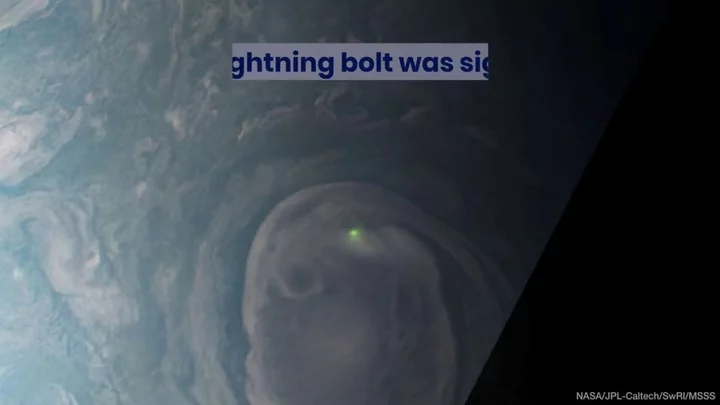
A key building block for human life has been discovered in interstellar space
One of the key building blocks required for human life has been found in the depths of space. Astronomers have been looking out into a region 1,000 light-years from Earth, known as the Perseus Molecular Complex, and they’ve found an amino acid which is essential in human growth. Tryptophan is one of the 20 amino acids required for humans to develop. Babies require it to grow and it’s also important for protein development and muscle function in adults Readings from the Spitzer telescope, which is no longer in use, were crucial to the discovery. Sign up to our free Indy100 weekly newsletter The Perseus Molecular Complex is only visible when viewed through infrared instruments, and tryptophan gives off an identifiable light reading when observed in this way. Dr Susana Iglesias-Groth is from the Instituto de Astrofísica de Canarias and was lead author on the new research. "The evidence for tryptophan in the Perseus molecular complex should encourage additional effort to identify other amino acids in this region, and in other star-forming regions,” Dr Iglesias-Groth said. “It is a very exciting possibility that the building blocks of proteins are widely present in the gas from which stars and planets form – it may be key for the development of life in exoplanetary systems.” The findings were published in the Monthly Notices of the Royal Astronomical Society. It comes after research showed that life forms could potentially be able to survive in the conditions in the clouds above Venus. The key point revolves around the presence of the biosignature gas phosphine, which is often identified as a sign of life. It also posits the idea that potential life forms on the planet could use sulphuric acid the way life forms on Earth use water. Have your say in our news democracy. Click the upvote icon at the top of the page to help raise this article through the indy100 rankings.
2023-06-22 19:21
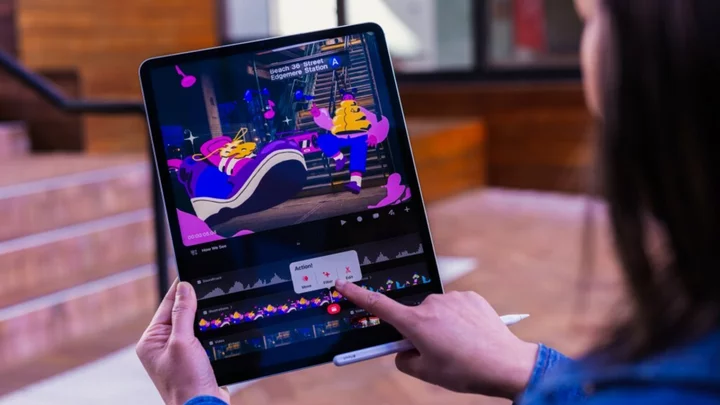
Procreate's new $20 animation app has artists losing their entire minds
The developer of beloved art app Procreate has announced Procreate Dreams, a new iPad animation
2023-09-11 14:47
You Might Like...

Options Announces Partnership with ETD to Provide Innovative Trading Solutions

Tallgrass and Korea Western Power Team Up to Advance South Korea’s Clean Energy Goals

AI Darling Criticized for Product Delays, Founder Tom Siebel’s Micromanaging

K-Wonderland Connects with Korean Artists Gen Z Loves

Where to watch Notre Dame vs Central Michigan livestream

Logitech feeling more confident after Q2 - CFO

The Best Computer Monitor Deals for June 2023
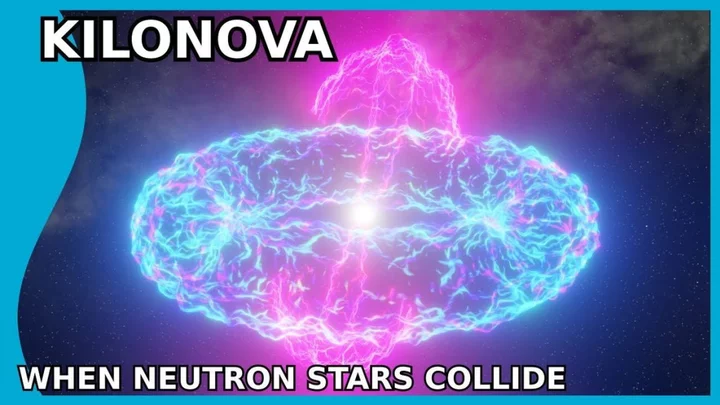
Scientists believe close kilonova explosion could threaten all life on Earth