

Rare ‘Holy Grail’ iPhone sells for almost $200,000
A rare iPhone has sold for almost $200,000. The phone was an original 2007 model of the iPhone, still factory sealed in its box. It is rare even among those elusive first versions of the iPhone, since it has only 4GB of storage. When the iPhone was released, more than 15 years ago, Apple originally offered it in a 4GB or 8GB storage options. The former proved unpopular and Apple struggled to sell it, with most customers instead opting to pay $100 for the extra storage – and it was soon discontinued, just two months after the phone was first released. That means that it has become a “Holy Grail” among collectors of iPhones. Its price reflects that status: original, factory sealed models of the model with larger storage have sold for $40,000 and $63,000 in recent months. The phone came from a member of the original engineering team at Apple when the iPhone first launched, according to to LCG Auctions, which sold the device. The box has never been opened and the phone has never been activated. “Collectors and investors would be hard pressed to find a superior example,” it wrote in the listing. “Relevance and rarity comprise a winning formula for this red-hot collectible.” The company had estimated that the phone would sell for $50,000 to $100,000. In the end, it attracted 28 bids and sold for $190,372.80, LCG Auctions said on its website. The 4GB iPhone had originally sold for $599 when it went on sale at the end of June 2007. Even that eventually proved too much, and Apple dropped the price of the 8GB model to $399 when it discontinued the 4GB version. As well as its 4GB of storage, the phone offered a 12 megapixel camera and 128MB of RAM. Released around 15 years later, the current iPhone 14 Pro comes with up 1TB of storage, a 48MP camera and 6GB of RAM. Read More Apple’s next iPhone may include new battery technology, report suggests Apple launches huge new payment upgrade for iPhone You can now download the huge new iPhone update – if you dare
2023-07-18 00:58

Knightscope Annual Shareholder Meeting Scheduled for 20 July 2023
MOUNTAIN VIEW, Calif.--(BUSINESS WIRE)--Jul 17, 2023--
2023-07-18 00:55
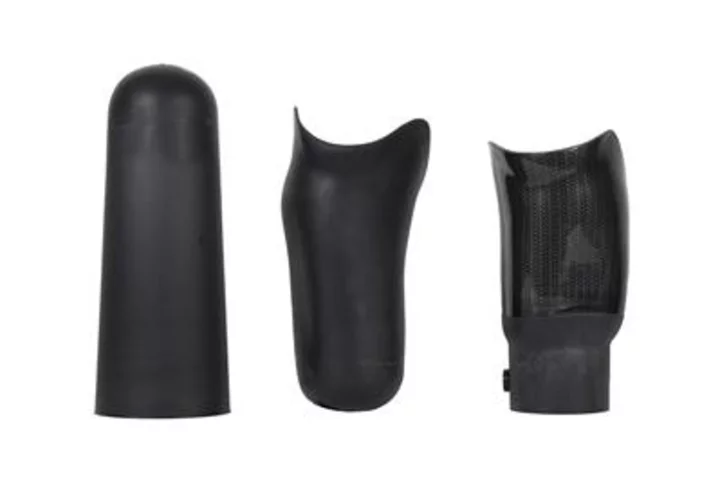
Xtremity Introduces All-New Proprietary Prosthetic Flexible Inner Socket: The XtremityTT™ FLEX
DENVER--(BUSINESS WIRE)--Jul 17, 2023--
2023-07-18 00:27

Science Exchange Hires Veteran Enterprise Technology Leader Ander Tallett as Chief Strategy Officer
SAN FRANCISCO--(BUSINESS WIRE)--Jul 17, 2023--
2023-07-18 00:19

New technique represents major breakthrough in search for aliens, scientists say
A new technique is a dramatic breakthrough in the search for alien life, astronomers say. Researchers at the Breakthrough Listen project based at the University of California, Berkeley say they have developed a new way to be sure that any potential signal is really coming from space – and not from something more boring. Astronomers spend vast amounts of time looking for radio signals that might have come from alien civilisations as part of work on the search for extraterrestrial intelligence, or SETI. But they have in the past been fooled by very human technology, such as cellphones, microwaves and car engines, that can produce a blast of radio signals that look as if they have come from distant worlds. One way to check whether signals are really alien is to point the telescope elsewhere and then repeatedly return to the same spot, with the hope of seeing the signal again and ensuring that it is not a false alarm. But that is not foolproof – and only works if the signal sticks around. Some of the most promising radio signals might only be detectable once. The so-called “Wow!” signal, for instance – a radio signal detected in 1977 that was so shocking the astronomer who found it wrote the exclamation on a printout – has not been detected since, and astronomers still do not know whether it was an alien message or just a mistake. Now scientists have devised a new test that can be used to see whether a signal has really passed through interstellar space, which should help show that it is not from elsewhere on Earth. It works by looking for “scintillation” – the changes in amplitude of a signal as it is affected by the cold plasma of space. “The first ET detection may very well be a one-off, where we only see one signal. And if a signal doesn’t repeat, there’s not a lot that we can say about that. And obviously, the most likely explanation for it is radio frequency interference, as is the most likely explanation for the Wow! signal,” said Andrew Siemion, principal investigator for Breakthrough Listen and director of the Berkeley SETI Research Center, which operates the world’s longest running SETI program. “Having this new technique and the instrumentation capable of recording data at sufficient fidelity such that you could see the effect of the interstellar medium, or ISM, is incredibly powerful.” Dr Siemion called the breakthrough “one of the biggest advances in radio SETI in a long time” and said that it would be the first time researchers would be able to differentiate a real signal from a false alarm, even if it was only detected once. The technique can only be used for signals that have travelled 10,000 light years or more to Earth, researchers note. If it was closer to us, the scintillation effect cannot be seen because they are not travelling through enough of the interstellar medium, or ISM. The research is described in a new paper, ‘On Detecting Interstellar Scintillation in Narrowband Radio SETI’, published in The Astrophysical Journal. Read More Battery breakthroughs are about to trigger a transport revolution Huge asteroid nearly crashes into Earth – and is only spotted days later ChatGPT rival with ‘no ethical boundaries’ sold on dark web
2023-07-18 00:19

Microsoft and UK regulators want more time to work on $69 billion Activision deal
Microsoft and British regulators sought more time from a court Monday as the U.S. tech company uses a rare second chance to overcome opposition to its $69 billion bid for video game maker Activision Blizzard
2023-07-18 00:18

Microsoft, UK ask for two-month pause of appeal over Activision deal
By Sam Tobin LONDON Microsoft on Monday asked a London tribunal to pause its appeal against Britain's block
2023-07-17 23:59

Large asteroid flies close to Earth – and is only spotted days later
Earth narrowly avoided an asteroid that flew past last week – and scientists did not spot the object until it had made its visit. The object, named 2023 NT1, was spotted on 15 July by the Atlas observatory in South Africa. Astronomers there say it was up to 60 metres in size. But at that point it had already made the dangerous bit of its journey: two days earlier, it had swept past Earth, at just a quarter of a distance between us and the Moon. At 60,000 miles away, that is a long way from doing any damage, but relatively close for an asteroid. As such, the asteroid didn’t pose any danger to Earth. But it was an important reminder that truly dangerous asteroids could fly towards Earth – and that we might not spot them until they are too late. That is because many asteroids, including 2023 NT1, fly towards us from the Sun. The bright light of our star can make it difficult to see anything else, especially asteroids that are relatively small at the scale of space. The European Space Agency estimates there could be a million asteroids in the same size range of 30 to 100 metres near Earth. And 98.9 per cent of them are still undiscovered, the space agency says. It has said that shows that there needs to be an improvement in the capabilities of humanity to detect such asteroids. Some are already being worked on, such as ESA’s NEOMIR, which will orbit between the Sun and the Earth and is designed to work as an early warning system for asteroids that would otherwise avoid detection, but will not launch until 2030. The asteroid 2023 NT1, at 60 metres across, is among the largest to have come so close to Earth in recent times. At that size, it could have done significant damage: the Chelyabinsk meteoroid that injured 1,500 people and damaged buildings when it fell to Earth in 2013 was only 20 metres across, for instance. From its approach last week, scientists have been able to catalogue and predict the asteroid’s movements. That should make it possible to track and spot it next time it comes close to Earth. Read More Powerful solar flare to disrupt communications, Russians warn What to expect from India’s Chandrayaan-3 mission to Moon’s south pole India launches historic mission to Moon’s south pole
2023-07-17 23:51

Announcing MedPerf Open Benchmarking Platform for Medical AI
SAN FRANCISCO--(BUSINESS WIRE)--Jul 17, 2023--
2023-07-17 23:24

China-US climate progress could hinge on curbing of methane
By Valerie Volcovici and David Stanway BEIJING (Reuters) -This week's visit by U.S. climate envoy John Kerry to China after
2023-07-17 23:21

U.S. chip lobby presses Biden to refrain from further China curbs
By Stephen Nellis and Karen Freifeld (Reuters) -The U.S.-based Semiconductor Industry Association trade group on Monday called on the Biden
2023-07-17 22:55

Stock market today: Wall Street drifts as stocks worldwide stall after weak Chinese data
Wall Street is drifting, as stocks worldwide stall following the latest signal that the world’s second-largest economy is flagging
2023-07-17 22:47